
#Mathematics
Latest news articles tagged with "Mathematics". Follow the timeline of events, related topics, and entities.
Articles (18)
-
 🇺🇸 How Writing Changes Mathematical Thought
[USA]
🇺🇸 How Writing Changes Mathematical Thought
[USA]
David E. Dunning explores how mathematical notation is a social, world-building technology. The post How Writing Changes Mathematical Thought first appeared on Quanta Magazine
Related: #Communication -
🇺🇸 Can LLM generate interesting mathematical research problems?
[USA]
arXiv:2603.18813v1 Announce Type: new Abstract: This paper is the second one in a series of work on the mathematical creativity of LLM. In the first paper, the authors proposed three criteria for eva...
Related: #AI Research -
🇺🇸 Understanding the Theoretical Foundations of Deep Neural Networks through Differential Equations
[USA]
arXiv:2603.18331v1 Announce Type: new Abstract: Deep neural networks (DNNs) have achieved remarkable empirical success, yet the absence of a principled theoretical foundation continues to hinder thei...
Related: #Machine Learning -
🇺🇸 The Agentic Researcher: A Practical Guide to AI-Assisted Research in Mathematics and Machine Learning
[USA]
arXiv:2603.15914v1 Announce Type: cross Abstract: AI tools and agents are reshaping how researchers work, from proving theorems to training neural networks. Yet for many, it remains unclear how these...
Related: #AI-assisted research, #Machine Learning -
 🇬🇧 Did you solve it? Are you a match for the dinkiest mag in maths?
[United Kingdom]
🇬🇧 Did you solve it? Are you a match for the dinkiest mag in maths?
[United Kingdom]
<p>The answers to today’s problems</p><p>Earlier today I posed four puzzles from the Hyde Park Math Zine, a maths fanzine from Austin, Texas. Here they are again with solutions.</p><p><strong>1. Ring ...
Related: #Puzzles -
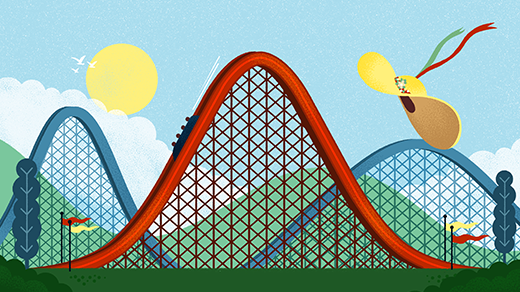 🇺🇸 The Math That Explains Why Bell Curves Are Everywhere
[USA]
🇺🇸 The Math That Explains Why Bell Curves Are Everywhere
[USA]
The central limit theorem started as a bar trick for 18th-century gamblers. Now scientists rely on it every day. The post The Math That Explains Why Bell Curves Are Everywhere first appe...
Related: #Statistics -
 🇺🇸 You Can Approximate Pi by Dropping Needles on the Floor
[USA]
🇺🇸 You Can Approximate Pi by Dropping Needles on the Floor
[USA]
Who needs a supercomputer when you can calculate pi with a box of sewing needles?
Related: #Probability -
🇺🇸 Agentic Neurosymbolic Collaboration for Mathematical Discovery: A Case Study in Combinatorial Design
[USA]
arXiv:2603.08322v1 Announce Type: new Abstract: We study mathematical discovery through the lens of neurosymbolic reasoning, where an AI agent powered by a large language model (LLM), coupled with sy...
Related: #AI Research -
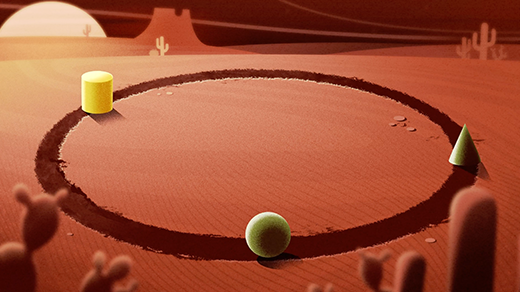 🇺🇸 New Strides Made on Deceptively Simple ‘Lonely Runner’ Problem
[USA]
🇺🇸 New Strides Made on Deceptively Simple ‘Lonely Runner’ Problem
[USA]
A straightforward conjecture about runners moving around a track turns out to be equivalent to many complex mathematical questions. Three new proofs mark the first significant progress on the problem ...
Related: #Conjecture -
🇺🇸 Discovering mathematical concepts through a multi-agent system
[USA]
arXiv:2603.04528v1 Announce Type: new Abstract: Mathematical concepts emerge through an interplay of processes, including experimentation, efforts at proof, and counterexamples. In this paper, we pre...
Related: #AI Research -
🇺🇸 VERIFY-RL: Verifiable Recursive Decomposition for Reinforcement Learning in Mathematical Reasoning
[USA]
arXiv:2602.07559v1 Announce Type: new Abstract: Training language models to solve complex mathematical problems benefits from curriculum learning progressively training on simpler subproblems. Howeve...
Related: #Artificial Intelligence, #Reinforcement Learning -
🇺🇸 iGRPO: Self-Feedback-Driven LLM Reasoning
[USA]
arXiv:2602.09000v1 Announce Type: new Abstract: Large Language Models (LLMs) have shown promise in solving complex mathematical problems, yet they still fall short of producing accurate and consisten...
Related: #Artificial Intelligence, #Machine Learning -
🇺🇸 Exactly Computing do-Shapley Values
[USA]
arXiv:2602.07203v1 Announce Type: cross Abstract: Structural Causal Models (SCM) are a powerful framework for describing complicated dynamics across the natural sciences. A particularly elegant way o...
Related: #Artificial Intelligence, #Data Science -
🇺🇸 Bayesian Matrix Decomposition and Applications
[USA]
arXiv:2302.11337v4 Announce Type: replace-cross Abstract: The sole aim of this book is to give a self-contained introduction to concepts and mathematical tools in Bayesian matrix decomposition in ord...
Related: #Data Science, #Education -
🇺🇸 Cochain Perspectives on Temporal-Difference Signals for Learning Beyond Markov Dynamics
[USA]
arXiv:2602.06939v1 Announce Type: cross Abstract: Non-Markovian dynamics are commonly found in real-world environments due to long-range dependencies, partial observability, and memory effects. The B...
Related: #Artificial Intelligence, #Machine Learning -
🇺🇸 Which Graph Shift Operator? A Spectral Answer to an Empirical Question
[USA]
arXiv:2602.06557v1 Announce Type: cross Abstract: Graph Neural Networks (GNNs) have established themselves as the leading models for learning on graph-structured data, generally categorized into spat...
Related: #Artificial Intelligence, #Data Science -
🇺🇸 The Condensate Theorem: Transformers are O(n), Not $O(n^2)$
[USA]
arXiv:2602.06317v1 Announce Type: cross Abstract: We present the Condensate Theorem: attention sparsity is a learned topological property, not an architectural constraint. Through empirical analysis ...
Related: #Artificial Intelligence, #Computing Efficiency -
🇺🇸 Hyperbolic Fine-Tuning for Large Language Models
[USA]
arXiv:2410.04010v2 Announce Type: replace-cross Abstract: Large language models (LLMs) have demonstrated remarkable performance across various tasks. However, it remains an open question whether the ...
Related: #Artificial Intelligence, #Computational Linguistics
Key Entities (5)
- Large language model (1 news)
- Artificial intelligence (1 news)
- Machine learning (1 news)
- Combinatorial design (1 news)
- AI agent (1 news)
About the topic: Mathematics
The topic "Mathematics" aggregates 18+ news articles from various countries.