Who / What
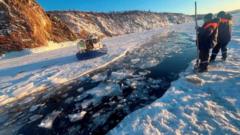
Siberia is an extensive geographical region that covers all of North Asia. The region stretches from the Ural Mountains in the west to the Pacific Ocean in the east and forms part of Russia’s sovereign territory.
Background & History
Siberia’s annexation began with the fall of the Khanate of Sibir in 1582 and concluded with the annexation of Chukotka in 1778. Over the centuries it has been incorporated into Russia and its predecessor states through a lengthy conquest.
Why Notable
Siberia’s vast expanse—over 13.1 million km²—covers about three‑quarters of Russia’s total area. Despite its size, it is sparsely populated, housing roughly one‑quarter of the country’s residents, underscoring its demographic and geographic significance.
In the News
Siberia remains a critical region within Russia, though no specific recent events are mentioned. Its continued relevance stems from its scale, resources, and strategic location.