
Who / What
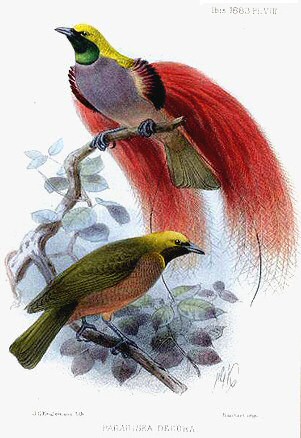
Sexual selection is a mode of natural selection where individuals compete for mates and choose partners based on certain traits. It results in reproductive success being influenced by attractiveness or competitive ability, leading to evolutionary changes in a population. This process distinguishes itself from natural selection, which focuses on survival.
Background & History
The concept of sexual selection was formally articulated by Charles Darwin in his 1871 book *The Descent of Man*. Darwin observed that traits seemingly detrimental to survival could evolve if they enhanced mating success. His work built upon earlier observations of animal behavior and morphology, highlighting the importance of mate choice in shaping species' evolution. The theory has been continually refined and supported by evidence from diverse fields like zoology, biology, and genetics.
Why Notable
Sexual selection is a fundamental evolutionary process that significantly impacts the characteristics of species. It drives the evolution of traits associated with mate attraction, such as elaborate displays or weaponry. This mechanism contributes to biodiversity and explains the wide range of seemingly extravagant features observed in the natural world. Understanding sexual selection helps us comprehend the complex interplay between genes, behavior, and reproductive success.
In the News
Sexual selection remains a critical area of research in evolutionary biology and behavioral ecology. Current studies explore how human cultural factors interact with sexual selection, influencing mate preferences and social dynamics. The field also investigates the impact of environmental changes on mating strategies and reproductive success across various species.

