Who / What
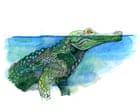
A crocodile (family *Crocodylidae*) is a large, semiaquatic reptile that lives throughout the tropics in Africa, Asia, the Americas, and Australia. The term “crocodile” is used specifically for the members of the Crocodylidae family—true crocodiles—while the broader order Crocodilia also includes alligators, caimans, and gharials.
Background & History
Crocodiles belong to the family *Crocodylidae*, one of several families within the order Crocodilia. Fossil evidence shows that crocodiles evolved in the late Jurassic, surviving major mass‑extinction events and spreading across continents as they drifted apart. Their current tropical distribution arose from this long evolutionary history and successive continental movements.
Why Notable
As apex predators, crocodiles shape aquatic ecosystems and help maintain ecological balance. Their powerful jaws, semi‑aquatic lifestyle, and long lifespans make them a key focus for biological research. Additionally, crocodiles hold significant cultural and symbolic value in many societies worldwide.
In the News
Recent scientific efforts have focused on the conservation status of various crocodile species, many of which face habitat loss and poaching pressures. Genetic studies are also underway to clarify evolutionary relationships within the *Crocodylidae* family.