
Who / What
Dark matter is a hypothetical, invisible form of matter that does not interact with light or any other electromagnetic radiation. It is inferred from gravitational effects on visible structures, such as galaxies and galaxy clusters, that cannot be explained by ordinary matter alone. In astronomy and cosmology, dark matter is considered a fundamental component of the universe.
Background & History
The concept of dark matter emerged from observations of galactic rotation curves and the dynamics of galaxy clusters, which suggested more mass than could be accounted for by visible stars and gas. Its existence was formalized in the 1930s by scientists who noted discrepancies between mass estimates and gravitational effects. Since then, it has become a central topic in cosmology, guiding research into the large-scale structure of the universe.
Why Notable
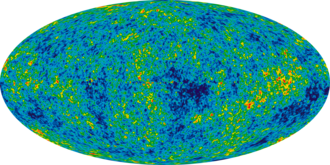
Dark matter plays a critical role in shaping galaxies and the overall distribution of mass in the cosmos. It is essential for explaining gravitational lensing, the cosmic microwave background anisotropies, and the formation and evolution of large-scale structures. Understanding dark matter is key to testing fundamental theories of gravity and particle physics.
In the News
Recent studies have refined the constraints on the density and distribution of dark matter using gravitational lensing maps and precision cosmology measurements. New observations from space telescopes continue to probe its properties, influencing both theoretical models and experimental searches for dark matter particles.


