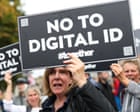
# Digital ID
---
Who / What
A **Digital ID** refers to two distinct but related concepts:
1. A **digital identity**, representing a subject’s claims about itself or others in digital environments (e.g., user profiles, authentication systems).
2. A **public key certificate** (also called a *Digital Certificate* or *Digital Identity Certificate*), an electronic document binding a public key to an identity via a digital signature for secure verification.
---
Background & History
The concept of Digital ID emerged from the intersection of cybersecurity and digital authentication in the late 20th century. Early developments focused on securing online transactions, particularly in finance and government services, where trustless verification was critical. The rise of cryptography (e.g., RSA encryption) enabled the creation of public key certificates as a standardized way to authenticate identities digitally. Key milestones include:
**1984**: Introduction of X.509 standards by ITU-T for digital certificate formats.**2000s–2010s**: Expansion into e-governance and identity management systems (e.g., EU’s eIDAS framework).---
Why Notable
Digital ID is pivotal in modern cybersecurity, enabling secure authentication across platforms without relying on passwords alone. Its significance lies in:
**Privacy-preserving access control** (e.g., self-sovereign identity models).**Cross-border verification** (critical for global digital economies and services).**Reducing fraud** by validating identities via cryptographic proofs.---
In the News
As digital transformation accelerates, Digital ID systems are gaining traction in:
**Government initiatives**: Countries like Estonia and India pilot national identity frameworks.**Financial tech**: Banks and fintech firms adopt biometric authentication (e.g., facial recognition + certificates).**Emerging challenges**: Debates over privacy vs. security, particularly with AI-driven identity theft risks.---
Key Facts
**Type:** Organization (broadly) / Concept (narrowly)**Also known as:**Digital Identity CertificatePublic Key CertificateeID (electronic ID)**Founded/Born:** No single founding entity; emerged from ITU-T standards (1984).**Key dates:**1984: X.509 standard adopted.2014: EU’s eIDAS regulation formalizes digital identity frameworks.**Geography:** Global, with major implementations in Europe and Asia.**Affiliation:** Industry-wide (cybersecurity, fintech, government IT).---
Links
[Wikipedia](https://en.wikipedia.org/wiki/Digital_ID)