Who / What
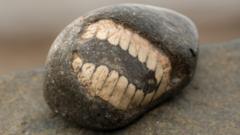
A fossil is any preserved remains, impression, or trace of a once‑living organism from a past geological age. It can include bones, shells, exoskeletons, stone imprints, amber‑preserved objects, hair, petrified wood, or DNA remnants. The collective body of such specimens is known as the fossil record.
Background & History
Fossils arise when organisms become buried in sediment and undergo mineralization or other processes that preserve their structure over millions of years. The term derives from Classical Latin *fossilis*, meaning “obtained by digging.” Since the 18th century, scientists like Georges Cuvier have studied fossils to develop paleontology, linking them to geological strata and evolutionary theory. Key milestones include the establishment of the fossil record as a foundational element of Earth’s scientific narrative.
Why Notable
Fossils provide direct evidence for the history of life, supporting the theory of evolution and revealing past biodiversity. They play a crucial role in reconstructing ancient climates, ecosystems, and mass‑extinction events. The variety of preserved materials—from bone to DNA—offers multidisciplinary insights for biology, geology, and astronomy. Fossil discoveries continually refine our understanding of Earth’s dynamic past and inform predictions about its future.
In the News
Advances in DNA extraction from old amber have opened new avenues for ancient genomics. Recent fossil findings in Asia are reshaping models of dinosaur distribution and migration. The growing use of 3D scanning technology is making fossil data more accessible for research and public education.