
# Lightning
Who / What
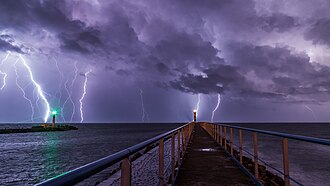
Lightning is a natural weather phenomenon characterized by the rapid discharge of electricity between regions within clouds or between clouds and the Earth. This electrostatic discharge manifests as bright flashes, often accompanied by thunder, and plays a critical role in atmospheric chemistry.
---
Background & History
While lightning itself has existed since Earth’s formation, its study dates back to ancient observations. Early civilizations attributed it to divine activity, but modern scientific understanding emerged with experiments like Benjamin Franklin’s kite experiment (1752), which demonstrated that lightning is an electrical phenomenon. Key milestones include the development of lightning detection systems in the 20th century and advancements in atmospheric research.
---
Why Notable
Lightning is a fundamental force shaping Earth’s climate, ecosystems, and even human history. It triggers wildfires, fertilizes soil with nitrogen, and influences weather patterns. Its study has led to breakthroughs in meteorology, technology (e.g., lightning detection sensors), and disaster preparedness.
---
In the News
Lightning remains a critical area of research due to its unpredictable nature and risks—such as severe storms and infrastructure damage. Recent developments include improved forecasting models and real-time tracking systems, enhancing safety awareness during thunderstorms globally.
---
Key Facts
---
Links
[Wikipedia](https://en.wikipedia.org/wiki/Lightning)


