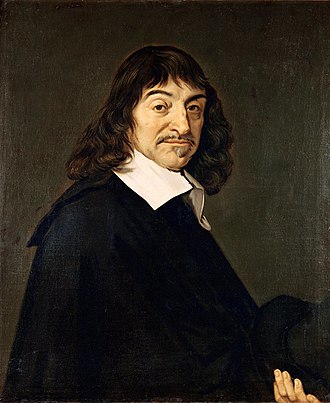
# René Descartes
---
Who / What
René Descartes was a French philosopher, mathematician, scientist, and logician. He is widely regarded as one of the most influential thinkers in the history of modern philosophy and science during the Renaissance era.
---
Background & History
Born on March 31, 1596, in La Haye-en-Touraine (modern-day Descartes, France), René Descartes was a central figure in the transition from medieval scholasticism to early modern thought. His intellectual contributions spanned philosophy, mathematics, and science, particularly through his development of analytic geometry—a fusion of algebra and geometry that laid foundational groundwork for modern scientific inquiry.
Descartes’ method of systematic doubt and his famous statement *"Cogito, ergo sum"* ("I think, therefore I am") became cornerstones of Western philosophy. His work challenged traditional authority, advocating instead for empirical evidence and logical reasoning as the basis for knowledge.
---
Why Notable
Descartes is celebrated for revolutionizing scientific thought by integrating mathematics into philosophical inquiry. His analytic geometry (1637) bridged algebra and geometry, enabling advancements in physics, engineering, and astronomy. Beyond his mathematical contributions, he introduced systematic skepticism, questioning long-held assumptions about knowledge, which influenced later thinkers like John Locke and Immanuel Kant.
His emphasis on the scientific method and rational inquiry laid essential groundwork for the Enlightenment, shaping modern science, philosophy, and intellectual discourse.
---
In the News
While René Descartes remains a historical figure, his ideas continue to resonate in contemporary discussions about skepticism, epistemology, and the intersection of mathematics and philosophy. His legacy persists in academic fields, particularly in philosophy of science and analytic geometry, inspiring ongoing research into foundational questions of knowledge and reasoning.
---
Key Facts
---