
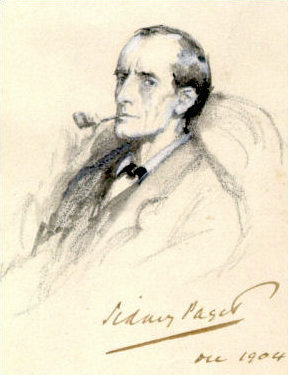
# Sherlock Holmes
---
Who / What
Sherlock Holmes is a fictional detective created by British author Sir Arthur Conan Doyle. Known for his exceptional deductive abilities, forensic expertise, and keen observational skills, he is portrayed as a brilliant but eccentric "consulting detective" who solves complex crimes through logical reasoning.
---
Background & History
Sherlock Holmes first appeared in print in 1887’s *A Study in Scarlet*, marking the debut of his literary persona. The character was conceived by Conan Doyle to explore themes of science, psychology, and crime-solving, blending real-world forensic techniques with imaginative storytelling. Originally introduced as a standalone novel, Holmes later became central to multiple short stories and novels across Conan Doyle’s works. His enduring legacy stems from his portrayal in literature, film, television, and adaptations that have cemented him as one of the most iconic fictional detectives in history.
---
Why Notable
Sherlock Holmes remains notable for revolutionizing detective fiction by elevating deduction to an art form. His character embodies intellectual brilliance, moral ambiguity, and a deep connection between science and crime-solving, influencing generations of writers, detectives, and audiences worldwide. Beyond literature, his impact extends into popular culture, inspiring adaptations that have kept him relevant across decades. Holmes’ reputation as a mastermind has also made him a cultural icon, symbolizing the pursuit of truth and justice.
---
In the News
While Sherlock Holmes is primarily a literary figure, his influence persists in modern media, including contemporary adaptations like *Sherlock* (BBC series) and films that reimagine his stories. His enduring appeal lies in his timeless themes—observation, deduction, and the human psyche—which continue to resonate with new audiences. Though not currently active in real-world investigations, Holmes remains a symbol of detective prowess, celebrated for his contributions to storytelling and forensic science.
---
Key Facts
---

![‘Young Sherlock’ Boss on Killing Off [SPOILER] and the ‘Multi-Season’ Plan to Pit Holmes Against Moriarty](https://variety.com/wp-content/uploads/2026/03/YoungSherlock-Holmes-Moriarty.2.jpg)


