
# Takeoff
Who / What
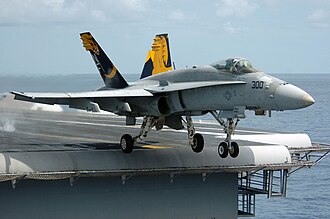
Takeoff is the phase of flight during which an aerial vehicle transitions from being on the ground or water to becoming airborne. For conventional aircraft, this involves accelerating along a runway (roll) until lift generated by the wings overcomes gravity. In space launches, takeoff is referred to as *liftoff*, marking the vertical departure from the launchpad.
---
Background & History
The concept of takeoff dates back to early aviation experiments in the late 19th and early 20th centuries, where pioneers like Orville and Wilbur Wright demonstrated controlled flight. The term itself evolved alongside advancements in aerodynamics and propulsion systems. While not an organization per se, the phase of takeoff became a critical technical milestone in both civilian aviation and space exploration, shaping modern aircraft design and launch technologies.
---
Why Notable
Takeoff is fundamental to aviation and spaceflight, determining whether a vehicle can achieve sustained flight or escape Earth’s atmosphere. Its success hinges on precise engineering—balancing thrust, lift, and air resistance—to ensure safe transition from ground to airspace. The phase also symbolizes human ingenuity in overcoming gravity, influencing industries like aerospace, defense, and transportation.
---
In the News
While not a current organization, takeoff remains a critical operational focus for airlines, military aircraft, and space agencies worldwide. Recent advancements (e.g., electric vertical takeoff/landing vehicles) highlight evolving challenges in optimizing efficiency and safety during this phase. Its relevance persists as technology pushes boundaries in sustainable aviation and space exploration.
---
Key Facts
---
Links
[Wikipedia](https://en.wikipedia.org/wiki/Takeoff)


