Who / What
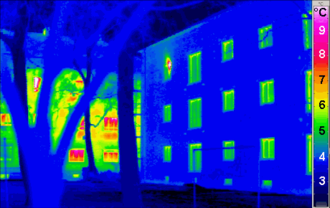
Thermography (also called infrared thermography or IRT) is a measurement and imaging technique in which a thermal camera detects infrared radiation emitted and reflected by the surface of objects. The radiation detected depends on the object’s temperature, its emissivity, and the surrounding environment.
Background & History
Infrared thermography was developed as a way to capture temperature variations visually, using cameras that sense heat rather than visible light. The field grew with advances in infrared detector technology in the mid‑20th century, allowing the technique to become a practical tool for scientific, industrial, and safety applications.
Why Notable
IRT provides a non‑contact method to monitor temperature and detect heat loss, material defects, or abnormal heat patterns, offering critical insights in maintenance, medical diagnostics, and environmental monitoring. Its ability to reveal hidden thermal information makes it an essential tool across many engineering and scientific disciplines.
In the News
Infrared thermography is increasingly employed for energy efficiency assessments, building inspections, and monitoring industrial processes, especially in the context of sustainable construction and predictive maintenance. Recent developments focus on integrating higher‑resolution sensors and AI analytics for more accurate thermal imaging.