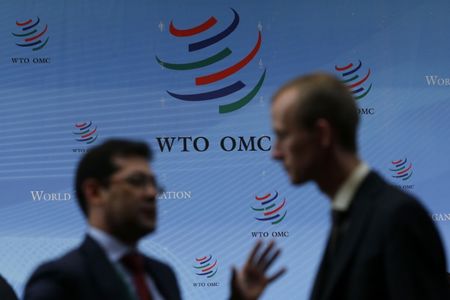
# World Trade Organization (WTO)
---
Who / What
The **World Trade Organization (WTO)** is an intergovernmental organization dedicated to regulating and facilitating international trade among its member nations. It serves as a forum for negotiating agreements, resolving disputes, and promoting fair trade practices across the global economy.
---
Background & History
Established on **1 January 1995**, the WTO succeeded the **General Agreement on Tariffs and Trade (GATT)**, which was founded in **1948** to reduce trade barriers. The transition followed the **Marrakesh Agreement** signed in 1994, marking a pivotal moment in international economic governance. Over its existence, the WTO has evolved from a tariff-negotiating body into a comprehensive institution overseeing trade policies, dispute resolution, and technical assistance for member states.
---
Why Notable
The WTO plays a critical role in shaping global trade by providing a structured framework for negotiations on tariffs, subsidies, and market access. Its influence extends to over **98% of global trade** and **global GDP**, making it one of the most impactful intergovernmental bodies. By reducing barriers to commerce and fostering economic cooperation, the WTO contributes significantly to international stability and growth.
---
In the News
The WTO remains a focal point for discussions on **trade liberalization, digital economy regulations, and climate-related trade policies**. Recent developments include efforts to address challenges like **protectionism, supply chain disruptions**, and the impact of new technologies on global markets. Its relevance is heightened by ongoing debates over fairness in trade agreements and its ability to adapt to evolving economic landscapes.
---
Key Facts
---