
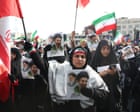
A country divided: state media show Mojtaba supporters as Iranians online fear repression
#Iran #Mojtaba Khamenei #state media #repression #political tension #succession #online discourse
📌 Key Takeaways
- Iranian state media highlights support for Mojtaba Khamenei, son of Supreme Leader Ali Khamenei, amid political tensions.
- Online discourse reveals widespread fear of repression among Iranians, contrasting with state narratives.
- The divide reflects broader societal polarization over leadership and political freedoms in Iran.
- The situation underscores concerns about potential succession plans and internal power dynamics.
📖 Full Retelling
🏷️ Themes
Political Division, Media Narratives
📚 Related People & Topics
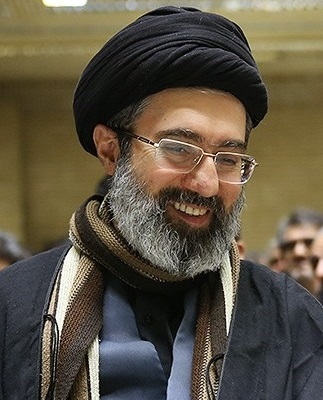
Mojtaba Khamenei
Iranian politician and cleric (born 1969)
Mojtaba Hosseini Khamenei (born 8 September 1969) is an Iranian politician and Muslim cleric. The second eldest child of Ali Khamenei, the former supreme leader of Iran, Mojtaba Khamenei served in the Iran–Iraq War from 1987 to 1988, and also reportedly took control of the Basij that was used to sup...

Iran
Country in West Asia
# Iran **Iran**, officially the **Islamic Republic of Iran** and historically known as **Persia**, is a sovereign country situated in West Asia. It is a major regional power, ranking as the 17th-largest country in the world by both land area and population. Combining a rich historical legacy with a...
Entity Intersection Graph
Connections for Mojtaba Khamenei:
Mentioned Entities
Deep Analysis
Why It Matters
This news highlights the deepening political and social divisions within Iran, revealing a significant gap between state-controlled narratives and public sentiment. It matters because it exposes how authoritarian regimes manipulate media to project false unity while citizens face real threats of repression for dissent. The situation affects ordinary Iranians who risk persecution for expressing opposition views online, as well as the regime's international legitimacy when its domestic support is questioned. This tension between official propaganda and grassroots fear indicates potential instability that could impact regional geopolitics and Iran's internal security apparatus.
Context & Background
- Iran has a history of state control over media, with broadcast outlets like IRIB serving as government mouthpieces since the 1979 Islamic Revolution
- Online repression has intensified since the 2022-2023 Mahsa Amini protests, with authorities implementing internet shutdowns and arresting social media users
- Mojtaba Khamenei, son of Supreme Leader Ali Khamenei, has been increasingly visible in state media amid speculation about succession plans for Iran's leadership
- Iran's 'cyber army' and morality police have expanded surveillance and enforcement capabilities targeting digital dissent over the past decade
- The gap between official narratives and public sentiment has widened since the failed 2009 Green Movement protests and 2019 fuel price demonstrations
What Happens Next
Increased internet monitoring and arrests of social media critics are likely in coming weeks as authorities attempt to control the narrative ahead of potential protests. The regime may stage more public displays of support for Mojtaba Khamenei while further restricting digital platforms. International human rights organizations will probably document and condemn the repression, potentially leading to additional Western sanctions targeting Iranian officials involved in digital surveillance. If dissent continues growing online despite crackdowns, authorities might implement more severe internet blackouts similar to those during the 2022 protests.
Frequently Asked Questions
Mojtaba Khamenei is the second son of Supreme Leader Ali Khamenei and has been increasingly positioned as a potential successor in Iran's political structure. His growing visibility in state media suggests the regime may be testing public reception to a hereditary transition of power, which would break with the Islamic Republic's original revolutionary ideals.
Iran employs multiple methods including internet throttling and shutdowns during protests, mandatory registration for social media users, sophisticated surveillance technology, and legal penalties ranging from fines to imprisonment for 'cyber crimes.' The regime has developed one of the world's most extensive digital censorship systems, often blocking platforms like Instagram, Twitter, and Telegram while promoting domestic alternatives.
Iranians risk arrest, torture, lengthy prison sentences, and even execution for online activities deemed anti-regime. Authorities frequently charge social media users with 'propaganda against the state,' 'insulting the Supreme Leader,' or 'assembly and collusion against national security,' with punishments becoming increasingly severe since the 2022 protest movement.
State media serves as propaganda machinery controlled by hardliners, while online spaces—though monitored—allow more authentic expression through coded language, satire, and anonymous accounts. This divergence reflects the regime's inability to completely control digital discourse despite significant resources devoted to internet censorship and surveillance.
Western governments may impose additional sanctions on Iranian officials and entities involved in digital repression, while human rights organizations will document abuses. The discrepancy between state narratives and actual public sentiment could weaken Iran's diplomatic position as other nations question the regime's legitimacy and stability.