
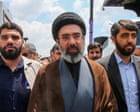
Elevating injured Mojtaba Khamenei to supreme leader shows Iranian war machine can run on autopilot
#Mojtaba Khamenei #Supreme Leader #Iran #succession #war machine #autopilot #regime stability
📌 Key Takeaways
- Mojtaba Khamenei, son of Supreme Leader Ali Khamenei, has been elevated to a leadership role despite being injured.
- This move demonstrates the Iranian regime's ability to maintain its military and political operations without disruption.
- The succession plan highlights the regime's focus on continuity and control within its power structure.
- The 'war machine' reference suggests Iran's strategic and military activities can proceed autonomously.
📖 Full Retelling
🏷️ Themes
Iranian leadership, Political continuity
📚 Related People & Topics
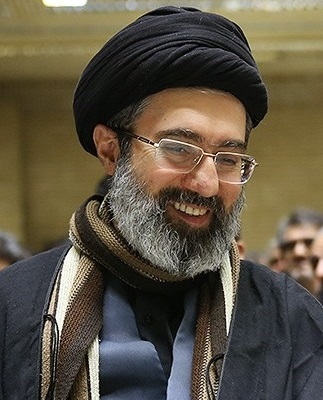
Mojtaba Khamenei
Iranian politician and cleric (born 1969)
Mojtaba Hosseini Khamenei (born 8 September 1969) is an Iranian politician and Muslim cleric. The second eldest child of Ali Khamenei, the former supreme leader of Iran, Mojtaba Khamenei served in the Iran–Iraq War from 1987 to 1988, and also reportedly took control of the Basij that was used to sup...
Entity Intersection Graph
Connections for Mojtaba Khamenei:
Mentioned Entities
Deep Analysis
Why It Matters
This development matters because it reveals the resilience of Iran's political and military systems during leadership transitions, potentially affecting regional stability and international relations. It impacts neighboring countries, global powers monitoring Middle Eastern security, and Iranian citizens concerned about governance continuity. The ability to maintain operations during leadership changes suggests Iran's institutions can sustain aggressive foreign policies regardless of individual leadership status, which could embolden proxy activities in Syria, Yemen, and Lebanon.
Context & Background
- Iran's Supreme Leader holds ultimate authority over military, foreign policy, and religious matters under the country's constitution
- Succession planning has been a sensitive topic since the 1989 transition from Ayatollah Khomeini to Ayatollah Khamenei
- Mojtaba Khamenei has been viewed as a potential successor to his father for over a decade, though this was never officially confirmed
- Iran maintains extensive proxy networks across the Middle East through the Islamic Revolutionary Guard Corps (IRGC)
What Happens Next
The Assembly of Experts will likely formalize the succession process while monitoring Mojtaba Khamenei's recovery. Regional proxies may test continuity of support during this transition period. International observers will analyze whether policy directions shift under temporary leadership, particularly regarding nuclear negotiations and regional conflicts. Long-term succession debates will intensify once the current Supreme Leader's health situation clarifies.
Frequently Asked Questions
Mojtaba Khamenei is the second son of current Supreme Leader Ali Khamenei and has been a prominent clerical figure in Iran's political circles. His significance stems from longstanding speculation that he might succeed his father, though official channels have consistently denied this possibility.
This phrase suggests Iran's military and proxy operations can continue without direct leadership intervention due to institutionalized command structures. It implies the Revolutionary Guards and allied militias have established procedures that function independently of daily political oversight.
Temporary leadership changes could either delay negotiations as new decision-makers establish positions or demonstrate continuity if existing policies proceed unchanged. The 'autopilot' concept suggests technical nuclear advancement might continue regardless of political transitions.
Regional actors may perceive either vulnerability or resilience in Iran's leadership structure, potentially influencing calculations by Saudi Arabia, Israel, and Gulf states. Proxy groups might receive consistent support despite leadership changes, maintaining regional tensions.