
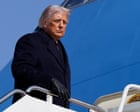
From ‘peace president’ to Operation Epic Fury: Donald Trump’s road to war
#Donald Trump #Operation Epic Fury #war #peace president #foreign policy #military engagement #U.S. politics
📌 Key Takeaways
- Donald Trump's presidency shifted from a 'peace president' stance to authorizing Operation Epic Fury.
- The article explores the factors and decisions leading to this military action.
- It contrasts Trump's initial foreign policy promises with eventual military engagement.
- The piece analyzes the implications of this shift on U.S. foreign policy and global stability.
📖 Full Retelling
🏷️ Themes
Foreign Policy, Military Action, Political Shift
📚 Related People & Topics
2026 Israeli–United States strikes on Iran
Ongoing military operation
On 28 February 2026, Israel and the United States launched a joint attack on various targets in Iran. The operation, codenamed Roaring Lion (Hebrew: מִבְצַע שְׁאָגַת הָאֲרִי, romanized: mivtsá she'agát ha'arí) in Israel, Operation Epic Fury by the United States Department of Defense, began with a se...

Donald Trump
President of the United States (2017–2021; since 2025)
Donald John Trump (born June 14, 1946) is an American politician, media personality, and businessman who is the 47th president of the United States. A member of the Republican Party, he served as the 45th president from 2017 to 2021. Born into a wealthy New York City family, Trump graduated from the...
Entity Intersection Graph
Connections for 2026 Israeli–United States strikes on Iran:
View full profileMentioned Entities
Deep Analysis
Why It Matters
This analysis matters because it examines a significant shift in U.S. foreign policy under Donald Trump, moving from his self-proclaimed 'peace president' identity to military action. It affects international relations, global security dynamics, and domestic political discourse about presidential power and military intervention. The examination reveals how campaign rhetoric contrasts with actual governance decisions, impacting diplomatic relationships and military alliances worldwide.
Context & Background
- Donald Trump campaigned in 2016 on an 'America First' platform that criticized previous military interventions and promised to avoid 'endless wars'
- During his presidency, Trump ordered the withdrawal of troops from Syria and Afghanistan while simultaneously increasing drone strikes and special operations
- Operation Epic Fury appears to represent a departure from Trump's earlier rhetoric about avoiding military entanglements
- The Trump administration maintained tense relationships with traditional allies while pursuing unconventional diplomacy with adversaries like North Korea
What Happens Next
Expect increased scrutiny of Trump's foreign policy legacy as the 2024 election approaches, with debates about whether Operation Epic Fury represents a policy shift or continuation of his approach. Military analysts will examine the operation's long-term consequences, while political opponents will contrast this action with Trump's 'peace president' claims. Future presidential candidates will likely reference this apparent contradiction in foreign policy discussions.
Frequently Asked Questions
Operation Epic Fury appears to be a military action ordered during Trump's presidency that contradicts his 'peace president' rhetoric. The specific details of the operation would need verification from official military sources, but it represents a significant use of military force.
Trump frequently referred to himself as a 'peace president' to contrast with previous administrations and highlight his efforts to avoid large-scale military deployments. This branding aligned with his campaign promises to end 'endless wars' and bring troops home from conflict zones.
This analysis highlights the complexity of presidential foreign policy decisions and the gap between campaign rhetoric and actual governance. It provides context for evaluating how leaders balance diplomatic solutions with military action, influencing how future administrations approach similar situations.
Trump's foreign policy included brokering the Abraham Accords between Israel and Arab nations, engaging in unprecedented diplomacy with North Korea, and withdrawing from international agreements like the Iran nuclear deal and Paris Climate Accord. His approach emphasized bilateral negotiations over multilateral frameworks.