
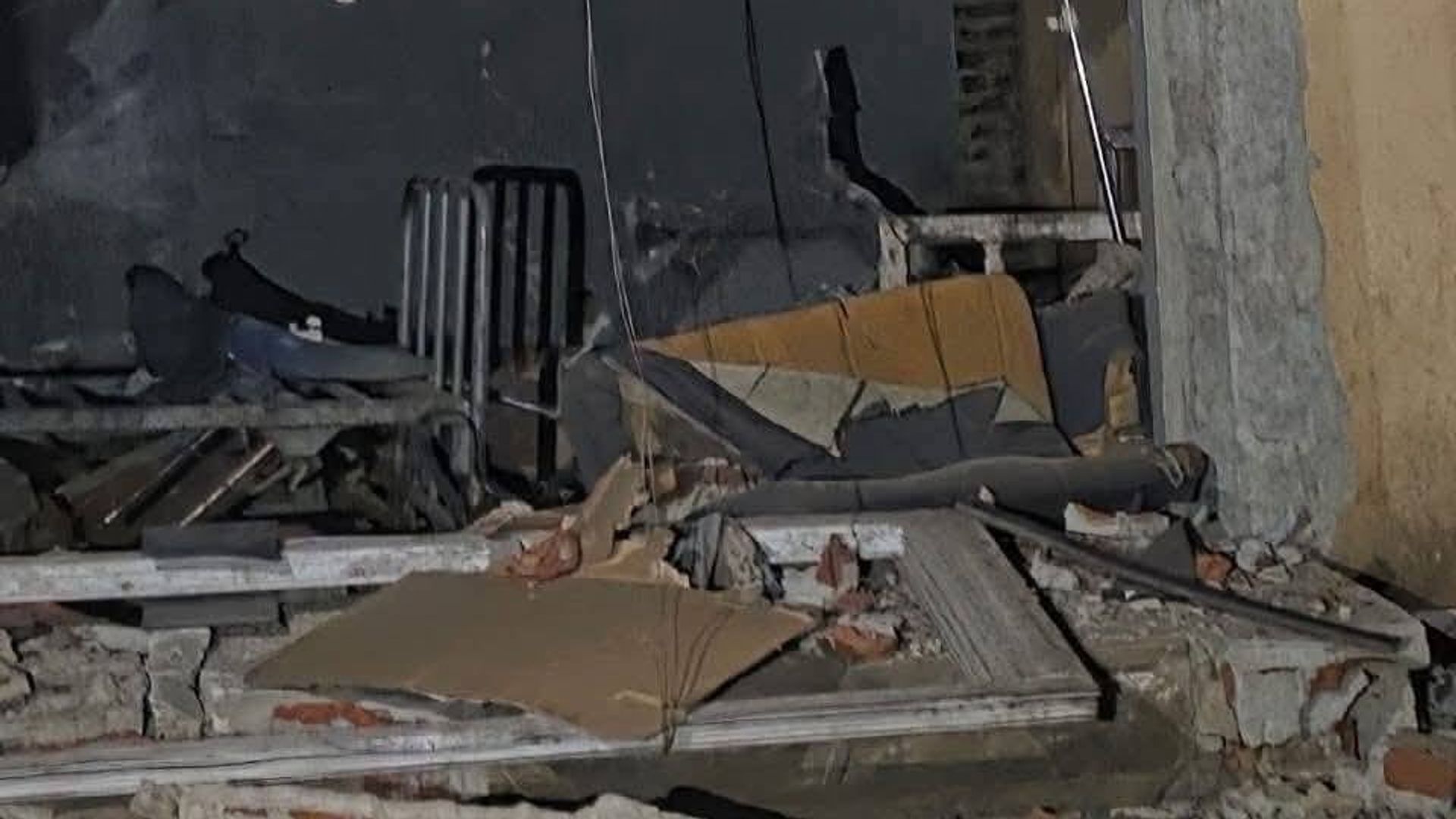
Hospital attack in Sudan kills 64, including 13 children
#Sudan #hospital attack #civilian casualties #children #humanitarian crisis #war crimes #medical safety
📌 Key Takeaways
- A hospital in Sudan was attacked, resulting in 64 fatalities.
- Among the dead are 13 children, highlighting civilian casualties.
- The incident underscores the severe humanitarian impact of the conflict in Sudan.
- The attack raises concerns about the safety of medical facilities and personnel in war zones.
📖 Full Retelling
🏷️ Themes
Conflict, Humanitarian Crisis
📚 Related People & Topics

Sudan
Country in Northeast Africa
Sudan, officially the Republic of the Sudan, is a country in Northeast Africa. It borders the Central African Republic to the southwest, Chad to the west, Libya to the northwest, Egypt to the north, the Red Sea to the east, Eritrea and Ethiopia to the southeast, and South Sudan to the south. Sudan h...
Entity Intersection Graph
Connections for Sudan:
Mentioned Entities
Deep Analysis
Why It Matters
This hospital attack represents a severe violation of international humanitarian law and medical neutrality, directly impacting civilian populations who rely on healthcare facilities during conflict. It affects not only the victims and their families but also the broader Sudanese population who now face diminished access to critical medical services. The incident highlights the deteriorating security situation in Sudan's ongoing conflict and raises urgent concerns about the protection of civilians and humanitarian workers.
Context & Background
- Sudan has been experiencing violent conflict since April 2023 between the Sudanese Armed Forces (SAF) and the Rapid Support Forces (RSF)
- Previous attacks on healthcare facilities have been documented throughout the conflict, with over 60 attacks reported by the World Health Organization as of late 2023
- The conflict has displaced approximately 8 million people internally and created one of the world's worst humanitarian crises
- International humanitarian law, including the Geneva Conventions, specifically protects medical facilities and personnel during armed conflicts
What Happens Next
International organizations will likely increase pressure for investigations into potential war crimes, with possible UN Security Council discussions in the coming weeks. Humanitarian agencies may face increased challenges delivering aid as security deteriorates further. The incident could prompt renewed diplomatic efforts to restart stalled peace negotiations between warring parties.
Frequently Asked Questions
The primary conflict is between the Sudanese Armed Forces (SAF), the country's regular military, and the Rapid Support Forces (RSF), a powerful paramilitary group. Both factions have been fighting for control since April 2023 after tensions over security sector reform and integration plans.
Hospitals may be targeted strategically to weaken enemy support systems, or incidentally due to proximity to military objectives. Both sides have been accused of violating international humanitarian law that specifically protects medical facilities during armed conflicts.
The UN, African Union, and regional organizations have attempted multiple ceasefire negotiations with limited success. Humanitarian agencies continue operating under extreme constraints, while international courts may eventually investigate potential war crimes committed during the conflict.
The conflict has created massive displacement, with approximately 8 million people forced from their homes. Food insecurity affects over 18 million people, while healthcare systems have largely collapsed, leaving millions without access to basic medical services.
International humanitarian law, particularly the Geneva Conventions, provides special protection to medical facilities, personnel, and patients. Deliberate attacks on hospitals constitute war crimes under both international humanitarian law and the Rome Statute of the International Criminal Court.