
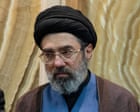
Mojtaba Khamenei was hurt in strike that killed his father, Iran’s Cyprus ambassador confirms
#Mojtaba Khamenei #Iran #Cyprus #ambassador #strike #killed #injured #confirmation
📌 Key Takeaways
- Mojtaba Khamenei was injured in a strike that killed his father.
- Iran's ambassador to Cyprus confirmed the incident.
- The strike resulted in the death of Mojtaba Khamenei's father.
- The confirmation provides official acknowledgment of the event.
📖 Full Retelling
🏷️ Themes
Iran, Assassination
📚 Related People & Topics
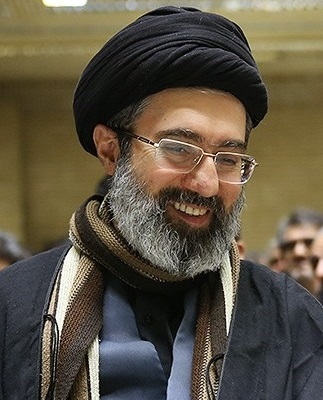
Mojtaba Khamenei
Iranian politician and cleric (born 1969)
Mojtaba Hosseini Khamenei (born 8 September 1969) is an Iranian politician and Muslim cleric. The second eldest child of Ali Khamenei, the former supreme leader of Iran, Mojtaba Khamenei served in the Iran–Iraq War from 1987 to 1988, and also reportedly took control of the Basij that was used to sup...

Iran
Country in West Asia
# Iran **Iran**, officially the **Islamic Republic of Iran** and historically known as **Persia**, is a sovereign country situated in West Asia. It is a major regional power, ranking as the 17th-largest country in the world by both land area and population. Combining a rich historical legacy with a...

Cyprus
Island country in West Asia and the Mediterranean Sea
Cyprus, officially the Republic of Cyprus, is an island country in the eastern Mediterranean Sea, located off the coast of the Levant in West Asia. Cyprus’ capital and largest municipality is Nicosia. The northeast portion of the island is occupied by Turkey, which is separated from the Republic of ...
Entity Intersection Graph
Connections for Mojtaba Khamenei:
Mentioned Entities
Deep Analysis
Why It Matters
This confirmation reveals that the recent strike in Iran had significant collateral damage beyond the targeted killing, potentially escalating regional tensions. It directly affects Iran's political succession plans since Mojtaba Khamenei was considered a potential successor to his father. The incident could influence Iran's foreign policy responses and internal power dynamics, particularly within conservative factions. Regional stability is further threatened as this personal dimension adds emotional weight to Iran's retaliatory calculus.
Context & Background
- Mojtaba Khamenei is the second son of Iran's late Supreme Leader Ayatollah Ali Khamenei and had been discussed as a potential successor
- The strike occurred during heightened regional tensions following previous assassinations of Iranian officials and nuclear scientists
- Iran has historically responded forcefully to attacks on its leadership figures, as seen after Qasem Soleimani's killing in 2020
- Cyprus maintains diplomatic relations with Iran despite EU sanctions, making its ambassador's confirmation noteworthy
- Succession in Iran's political system involves both formal constitutional processes and informal power negotiations among elites
What Happens Next
Iran will likely accelerate its investigation into the strike's perpetrators and prepare retaliatory measures, possibly within weeks. Internal power struggles may intensify as various factions position themselves in the emerging post-Khamenei landscape. Regional proxy groups aligned with Iran might increase attacks on perceived adversaries. International diplomatic efforts will focus on preventing escalation, with UN Security Council discussions possible in the coming month.
Frequently Asked Questions
Mojtaba Khamenei is the son of Iran's late Supreme Leader and was considered a potential political successor. His injury matters because it affects Iran's leadership transition plans and adds a personal dimension to the attack that could influence Iran's response.
Cypras maintains diplomatic channels with Iran despite tensions, making it a credible intermediary. The confirmation through official channels suggests Iran wants this information publicly acknowledged, possibly to build international sympathy or justify future actions.
This development increases the likelihood of Iranian retaliation against perceived adversaries, potentially through proxy forces in Syria, Iraq, or Yemen. It could trigger a cycle of escalation that draws in other regional powers and complicates diplomatic efforts.
Mojtaba's injury could disrupt succession planning, potentially strengthening other contenders like President Ebrahim Raisi or military figures. The incident may accelerate power struggles within Iran's conservative establishment during this transitional period.
Western nations will probably urge restraint while enhancing their regional security postures. Gulf states may seek mediation through intermediaries like Oman, while Israel and the U.S. will likely prepare for potential retaliatory attacks.