
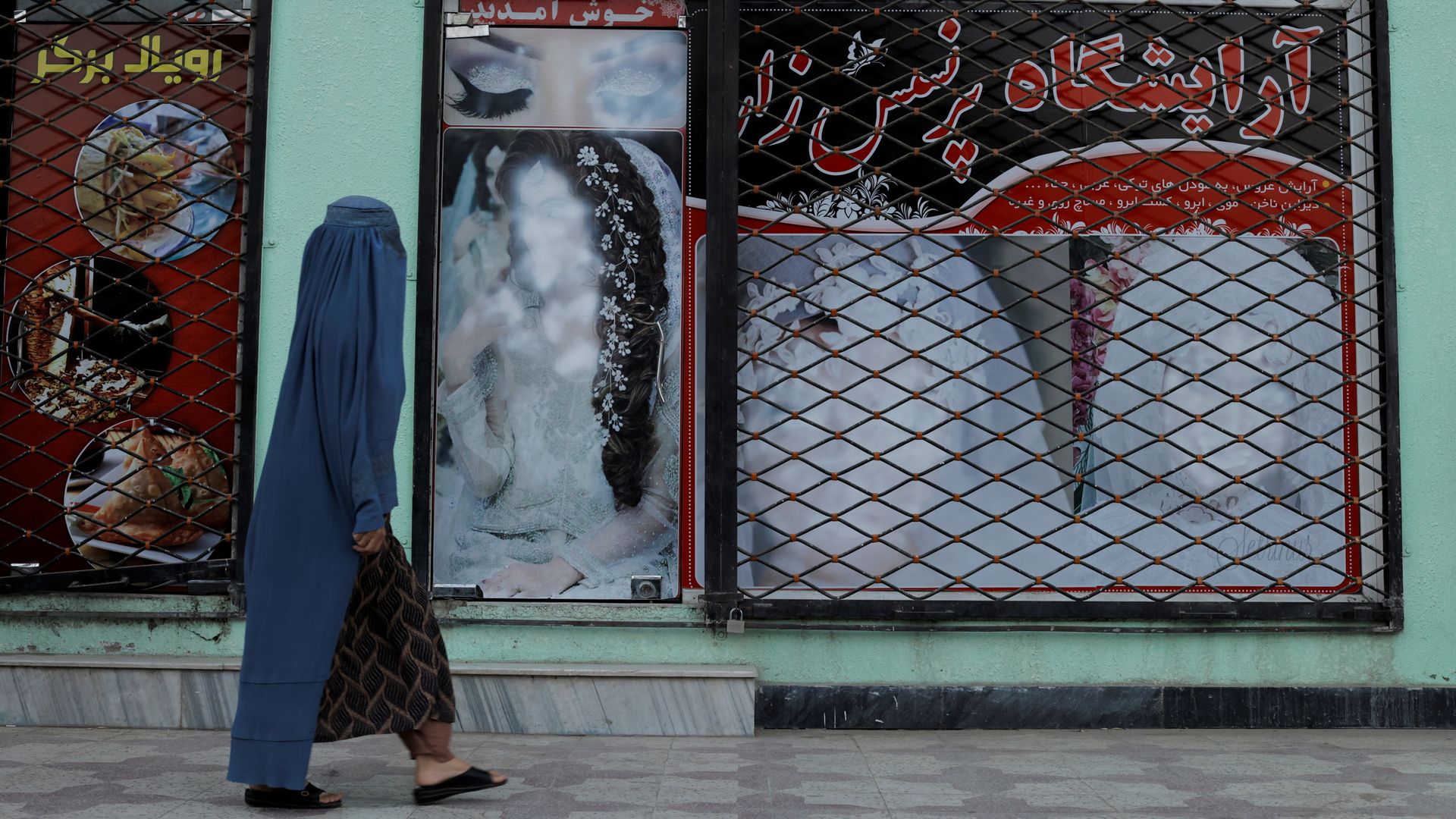
'My hands were shaking': Afghan women and girls 'forgotten' under Taliban rule
#Afghanistan #Taliban #women's rights #education ban #psychological trauma #international neglect #gender apartheid
📌 Key Takeaways
- Afghan women and girls report severe psychological distress under Taliban rule
- Taliban policies have systematically excluded women from public life and education
- International attention on Afghanistan has waned, leaving women feeling abandoned
- Women's rights have regressed dramatically since the Taliban takeover in 2021
🏷️ Themes
Human Rights, Gender Inequality
📚 Related People & Topics

Taliban
Islamist militant organization in control of Afghanistan
The Taliban, which also refers to itself by its state name, the Islamic Emirate of Afghanistan, is an Afghan political and militant organization with an ideology comprising elements of the Deobandi movement of Islamic fundamentalism and Pashtun nationalism. It ruled approximately 90% of Afghanistan ...
Afghanistan
Country in Central and South Asia
Afghanistan, officially the Islamic Emirate of Afghanistan, is a landlocked country located at the crossroads of Central and South Asia. It is bordered by Pakistan to the east and south, Iran to the west, Turkmenistan to the northwest, Uzbekistan to the north, Tajikistan to the northeast, and China ...
Entity Intersection Graph
Connections for Taliban:
Mentioned Entities
Deep Analysis
Why It Matters
This news highlights the severe human rights crisis in Afghanistan, directly impacting millions of women and girls who face systematic oppression under Taliban rule. It matters because it documents the reversal of decades of progress in education, employment, and personal freedoms, affecting half of Afghanistan's population. The international community is implicated due to its withdrawal and subsequent diplomatic and humanitarian challenges, making this a critical issue for global human rights advocacy and foreign policy.
Context & Background
- The Taliban previously ruled Afghanistan from 1996 to 2001, imposing strict interpretations of Islamic law that severely restricted women's rights, including bans on education and work.
- After the U.S.-led invasion in 2001, women gained increased access to education, employment, and political participation over two decades, though progress was uneven and faced ongoing challenges.
- The Taliban regained control in August 2021 following the withdrawal of U.S. and NATO forces, leading to the collapse of the Western-backed Afghan government and a humanitarian crisis.
- Since retaking power, the Taliban has reinstated many restrictive policies, such as closing secondary schools for girls and banning women from most jobs and public spaces, despite initial promises of moderation.
What Happens Next
In the near term, continued international pressure and humanitarian aid negotiations may occur, but significant policy changes by the Taliban are unlikely without external leverage. Upcoming developments could include further Taliban consolidation of power, potential internal divisions, and increased migration of Afghan women and girls seeking refuge. Long-term, the situation may worsen if global attention wanes, leading to deeper entrenchment of gender apartheid and economic collapse.
Frequently Asked Questions
Afghan women are banned from secondary and higher education, most employment outside healthcare and primary education, and accessing public spaces like parks and gyms without a male guardian. They must also adhere to strict dress codes and face limitations on freedom of movement and expression, effectively erasing their public participation.
The international response has included condemnation, sanctions, and freezing of Afghan assets, but direct intervention is limited due to geopolitical constraints and focus on humanitarian aid. Many countries have suspended diplomatic recognition and tied assistance to human rights improvements, though this has had minimal impact on Taliban policies so far.
They are described as 'forgotten' because global attention has shifted to other crises, and the Taliban's crackdown has persisted with little effective international action to restore their rights. This reflects a sense of abandonment after promises of protection during the withdrawal, leaving women isolated and without recourse as their freedoms vanish.
The restrictions exacerbate poverty, mental health crises, and food insecurity, as women-headed households lose income and access to services. This deepens Afghanistan's humanitarian emergency, with millions dependent on aid and facing increased risks of gender-based violence and exploitation.