
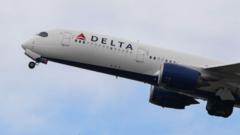
Several injured as turbulence hits Delta flight into Sydney
#Delta flight #turbulence #Sydney #injured #aviation safety #emergency response #air travel
📌 Key Takeaways
- Multiple passengers injured due to severe turbulence on Delta flight to Sydney
- Incident occurred during approach to Sydney Airport
- Emergency services responded upon landing to assist injured individuals
- Flight was operated by Delta Air Lines, highlighting aviation safety concerns
📖 Full Retelling
🏷️ Themes
Aviation Safety, Travel Disruption
📚 Related People & Topics

Sydney
Capital city of New South Wales, Australia
Sydney is the capital city of the state of New South Wales, and is the most populous city in Australia. Located on Australia's east coast, the metropolis surrounds Sydney Harbour and extends about 80 kilometres (50 mi) from the Pacific Ocean in the east to the Blue Mountains in the west, and about 8...
Entity Intersection Graph
Connections for Sydney:
Mentioned Entities
Deep Analysis
Why It Matters
This incident highlights the serious safety risks of in-flight turbulence, which can cause injuries even on routine commercial flights. It affects passengers, airline crews, and aviation regulators who must ensure safety protocols are effective. The event may lead to renewed scrutiny of turbulence detection systems and passenger safety procedures during unexpected weather events.
Context & Background
- Clear-air turbulence is particularly dangerous as it occurs without visual warning in cloudless skies
- The Federal Aviation Administration reports turbulence causes approximately 58 injuries annually on U.S. carriers
- Sydney Airport is one of Australia's busiest international hubs, handling over 40 million passengers yearly
- Delta Air Lines operates numerous transpacific routes connecting the U.S. with Australia and New Zealand
What Happens Next
The Australian Transport Safety Bureau will likely investigate the incident and issue preliminary findings within weeks. Delta will review its turbulence response procedures and may implement additional crew training. Passengers with serious injuries may pursue compensation claims, and aviation authorities could update turbulence advisory systems.
Frequently Asked Questions
Turbulence is caused by atmospheric disturbances including jet streams, thunderstorms, or mountain waves. Clear-air turbulence occurs unexpectedly in cloudless regions and is particularly challenging to detect with current radar systems.
While serious turbulence incidents are relatively rare, the FAA reports dozens of injuries annually. Most injuries occur when passengers or crew aren't properly secured with seatbelts during unexpected turbulence events.
Passengers should keep seatbelts fastened whenever seated, follow crew instructions immediately, and avoid moving about the cabin. Securing loose items and bracing against seats can help prevent injuries during sudden turbulence.
Delta will likely review this specific incident but won't ground flights. The airline may enhance crew training for turbulence response and reinforce passenger safety messaging about seatbelt usage during flights.