
SP
BravenNow
St David's Day: Ten things to know about the patron saint of Wales
| United Kingdom | politics | βœ“ Verified - bbc.com

St David's Day: Ten things to know about the patron saint of Wales

#St David's Day #Patron Saint of Wales #Welsh History #Religious Figures #Cultural Heritage #St Davids Cathedral #Welsh Identity #Age of Saints

πŸ“Œ Key Takeaways

  • St David's Day is celebrated on March 1 in honor of Wales' patron saint
  • Much of what is known about St David comes from writings centuries after his lifetime
  • St David was born to royalty but chose a life of religious service and austerity
  • His legacy includes numerous churches and the enduring tradition of 'doing the little things'

πŸ“– Full Retelling

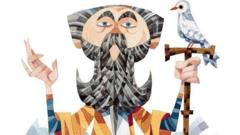
Wales celebrates St David's Day on March 1 each year to honor the country's patron saint, St David, a significant religious figure who established numerous communities and gives his name to Britain's smallest city. The celebrations across Wales commemorate the greatest figure in the Welsh Age of Saints, though much of what is known about him comes from writings centuries after his lifetime. Despite limited historical records, St David remains a central cultural and religious symbol in Welsh identity, with his legacy including numerous churches, monastic settlements, and the enduring tradition of celebrating his feast day. The historical understanding of St David has evolved significantly over the centuries, with early depictions showing him as a powerful archbishop, which doesn't align with his actual life as a humble religious leader. According to author Martin Crampin, the image of St David transformed in the last century to portray him more as a hermit or scholarly figure, better reflecting his likely character. This evolution demonstrates how historical figures' representations can change based on contemporary values and perceptions. Despite these changes, St David's importance to Welsh identity has remained constant, with his shrine at St Davids Cathedral being so significant that Pope Callistus II once declared two pilgrimages there equivalent to one to the Vatican. St David, originally named Dewi, was born to royalty with his father being Prince of Powys and his grandfather King Ceredig, though his exact birth date between 462-515 AD remains uncertain. Legend tells of his miraculous birth during a storm on a clifftop in Pembrokeshire, where lightning struck the rock, splitting it in two. As a religious leader, he founded monastic settlements in Wales, Brittany, and southwest England, and was known for his austere lifestyle as a vegetarian teetotaler who lived only on leeks and water. Despite his royal heritage, he chose a life of service, leaving behind numerous churches and a rock from Jerusalem that now sits in an altar at St Davids Cathedral. His final words, 'Be joyful, keep the faith, and do the little things,' continue to inspire Welsh people today, with the Welsh phrase 'Gwnewch y pethau bychain' remaining well-known in Welsh culture.

🏷️ Themes

Welsh Heritage, Religious History, Cultural Identity

πŸ“š Related People & Topics

History of Wales

History of Wales

The history of what is now Wales (Welsh: Cymru) begins with evidence of a Neanderthal presence from at least 230,000 years ago, while Homo sapiens arrived by about 31,000 BC. However, continuous habitation by modern humans dates from the period after the end of the last ice age around 9000 BC, and W...

View Profile β†’ Wikipedia β†—
St Davids Cathedral

St Davids Cathedral

Cathedral in Pembrokeshire, Wales

St Davids Cathedral (Welsh: Eglwys Gadeiriol Tyddewi) is a Church in Wales cathedral situated in St Davids, Britain's smallest city, in the county of Pembrokeshire, near the most westerly point of Wales.

View Profile β†’ Wikipedia β†—
Cultural heritage

Cultural heritage

Physical artifact or intangible attribute of a society inherited from past generations

Cultural heritage is the tangible and intangible legacy of a group or society that is inherited from past generations. Not all legacies of past generations are "heritage"; rather, heritage is a product of selection by society. Cultural heritage includes tangible culture (such as buildings, monuments...

View Profile β†’ Wikipedia β†—

Entity Intersection Graph

No entity connections available yet for this article.

Original Source
St David: Ten things to know about the patron saint of Wales 2 hours ago Share Save Matt Lloyd BBC Wales Share Save Every year on 1 March, Wales celebrates St David's Day - but how much do we actually know about the country's patron saint? Events across Wales today will celebrate the greatest figure in the Welsh Age of Saints. He established many religious communities and gives his name to the smallest city in Britain. But much of what we "know" is based on the Latin writings of Rhygyfarch, some 500 years after St David lived. Even the image of St David has changed over the centuries. "Much of the early images are based upon what we see in stained glass windows where he's portrayed as a very powerful archbishop," said author Martin Crampin. "But that was never the case at the time of his life. "It's not until last century that we see him as a hermit, or a more scholarly, humble and down-to-earth figure that perhaps fits in more with what we want to see St David." So meek or mighty, here are 10 "facts" to ponder. 1) His birthday is a mystery An angel is thought to have foretold his birth to St Patrick, 30 years before it happened - although the exact date is believed to be some time between 462 and 515 AD. Some say he lived more than 100 years and died on 1 March 589 - hence St David's Day. 2) He was born in a storm Whenever it was, legend has it St David's mother Non gave birth on a clifftop in Pembrokeshire during a fierce storm. At that exact moment, a bolt of lightning from heaven is said to have struck the rock, splitting it in two. A nearby holy well is said to have healing powers. 3) He had royal heritage It's believed that he was not only aristocratic but that he had royal lineage. According to legend, St David's father was Sant, the Prince of Powys, while his grandfather was King Ceredig, who founded Ceredigion. Non was a nun and later canonised herself. 4) He's not David That was the name he was baptised with. But Non named her son Dewidd, or Dewi to the lo...
Read full article at source

Source

bbc.com

More from United Kingdom

News from Other Countries

πŸ‡ΊπŸ‡Έ USA

πŸ‡ΊπŸ‡¦ Ukraine