
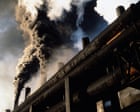
‘The trend is irreversible’: has Romania shattered the link between economic growth and high emissions?
#Romania #Renewable energy #Solar power #Carbon emissions #Decarbonization #Green deal #Photovoltaic panels
📌 Key Takeaways
- Romania has reduced its greenhouse gas emissions by 75% since the end of the communist era while growing its economy.
- The country is currently building Europe's largest solar farm near Bucharest, featuring one million panels and battery storage.
- A second, even larger solar project has already received approval in Romania's north-west region to expand capacity further.
- While the green transition is permanent, it has caused significant economic hardship for industrial communities reliant on coal and oil.
📖 Full Retelling
Romania has successfully decoupled its economic growth from carbon output, achieving a 75% reduction in greenhouse gas emissions since the fall of communism in 1989 while simultaneously expanding its national economy. This significant environmental shift, highlighted in recent government reports and regional development plans, is driven by a massive transition from heavy industrial coal reliance to renewable energy investments across the country. The nation, historically known as the birthplace of Europe's oil industry, is currently repositioning itself as a green energy hub to meet European Union climate targets and ensure long-term energy security.
Central to this transformation are several record-breaking infrastructure projects, including a 760MW solar farm currently under development in southern Romania near Bucharest. Once completed, this site will feature one million photovoltaic panels supported by advanced battery storage systems to provide consistent power even after sunset. However, the scale of ambition continues to grow, as regional authorities in the north-west have already approved an even larger facility intended to surpass current capacities, signaling a competitive rush toward renewable dominance.
While the data suggests a triumph for climate policy, the transition has not been without significant social and economic friction. The collapse of the old industrial guard and the closure of inefficient, high-emission factories have left various communities struggling to adapt to a modern labor market. For those living in former coal-mining regions, the shift has been described as 'brutal,' as the rapid decommissioning of traditional power plants often outpaces the creation of high-quality local jobs. Despite these challenges, experts and policymakers maintain that the trend toward decarbonization is now irreversible as the country aligns with global sustainability standards.
🏷️ Themes
Energy Transition, Environment, Economy
Entity Intersection Graph
No entity connections available yet for this article.