
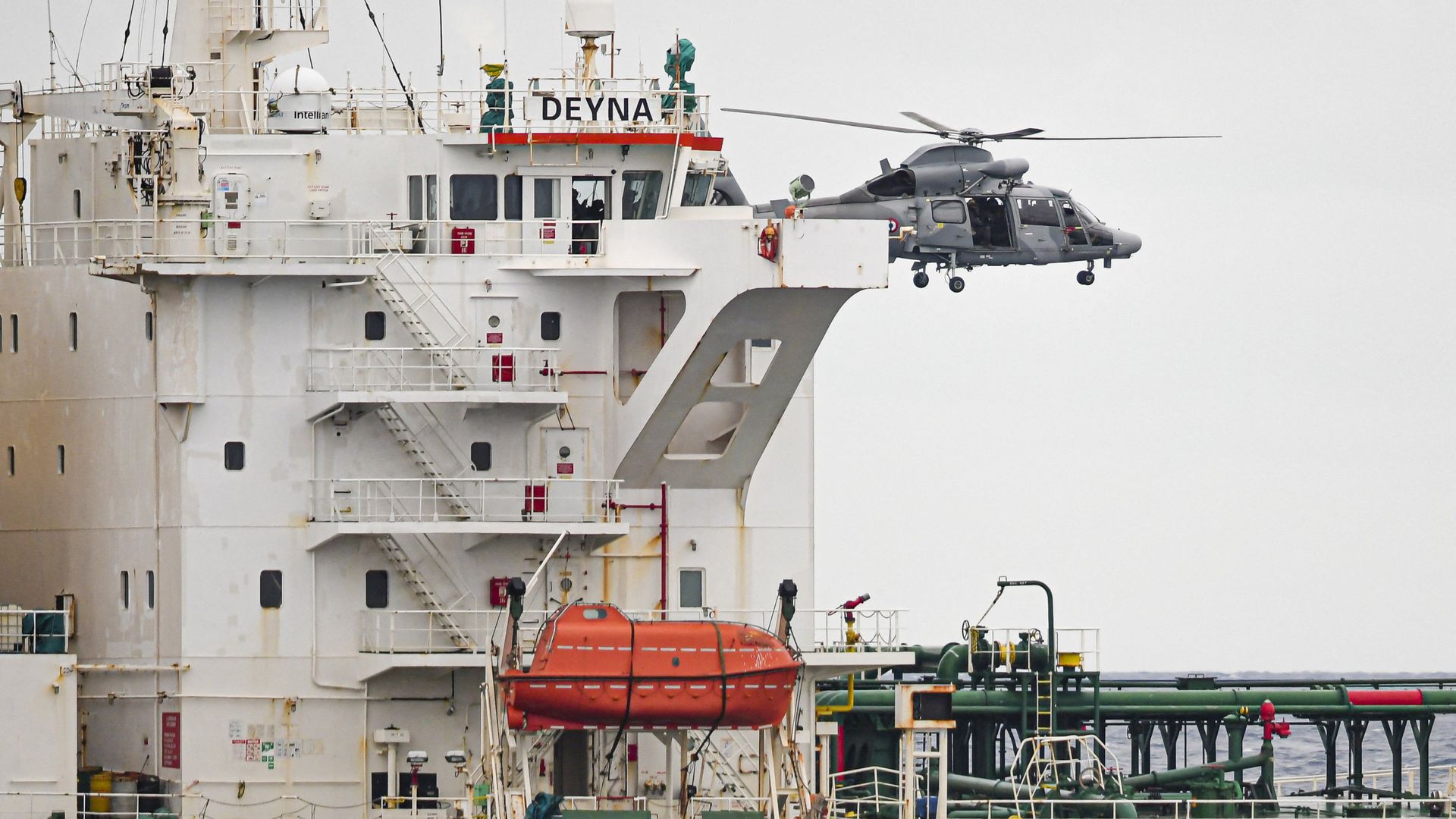
UK forces join military operation to seize Russian 'shadow fleet' tanker
#UK forces #military operation #Russian shadow fleet #tanker seizure #sanctions evasion #oil transport #maritime security
📌 Key Takeaways
- UK forces participated in a multinational military operation to seize a Russian 'shadow fleet' tanker.
- The operation targeted a vessel suspected of evading sanctions by transporting Russian oil.
- This action is part of broader efforts to enforce international sanctions against Russia.
- The seizure highlights ongoing geopolitical tensions and maritime security concerns.
📖 Full Retelling
🏷️ Themes
Sanctions Enforcement, Geopolitical Tensions
📚 Related People & Topics

Russian shadow fleet
Russian vessels evading sanctions
The Russian shadow fleet is a clandestine network of hundreds of vessels operated by Russia to evade sanctions, following the enactment of 2022 Russian crude oil price cap sanctions by the G7 countries and European Union (EU), in response to the 2022 Russian invasion of Ukraine.
Entity Intersection Graph
Connections for Russian shadow fleet:
Mentioned Entities
Deep Analysis
Why It Matters
This military operation represents a significant escalation in Western efforts to enforce sanctions against Russia's oil exports, directly impacting global energy markets and Russia's war funding capabilities. It affects European security forces, international shipping companies, and countries dependent on Russian oil who may face supply disruptions. The seizure demonstrates NATO members' willingness to use military force against Russian economic assets, potentially triggering retaliatory measures and increasing maritime tensions.
Context & Background
- Since 2022, Western nations have imposed price caps and sanctions on Russian oil to limit revenue for its war in Ukraine
- Russia developed a 'shadow fleet' of aging tankers using opaque ownership to circumvent sanctions and transport oil above price caps
- The UK has been a leading advocate for stricter enforcement of Russian oil sanctions through its Royal Navy and intelligence operations
- Previous seizures of Russian-linked vessels have occurred in EU ports, but open-sea military operations represent a more aggressive approach
What Happens Next
Russia will likely condemn the seizure as piracy and may retaliate against British commercial vessels or diplomatic interests. The incident will be discussed at upcoming NATO and G7 meetings, potentially leading to coordinated shadow fleet targeting operations. Maritime insurance rates for vessels trading with Russia will increase significantly, and Russia may accelerate development of alternative shipping routes through Arctic waters.
Frequently Asked Questions
Shadow fleet tankers are older vessels with opaque ownership structures that Russia uses to transport oil while evading Western sanctions. These ships often operate without proper insurance, use ship-to-ship transfers to obscure origins, and frequently turn off tracking systems to avoid detection.
The UK has been at the forefront of sanction enforcement against Russia and maintains significant naval capabilities for such operations. British involvement demonstrates NATO unity in economic warfare against Russia and protects the effectiveness of oil price cap mechanisms the UK helped design.
The operation likely relies on UN sanctions resolutions, EU restrictive measures, and national laws implementing oil price cap violations. Maritime law permits interdiction of vessels engaged in sanctions evasion, especially when transporting commodities funding armed conflict.
Immediate price spikes are likely as markets react to reduced Russian oil availability, though the long-term impact depends on whether this becomes a pattern of enforcement. The operation signals stronger sanctions compliance that could permanently reduce Russian oil volumes in global markets.
While direct naval conflict is unlikely, Russia may conduct harassing maneuvers against NATO vessels or seize Western commercial ships in retaliation. The incident increases the risk of accidental escalation in crowded shipping lanes like the Baltic Sea or English Channel.