
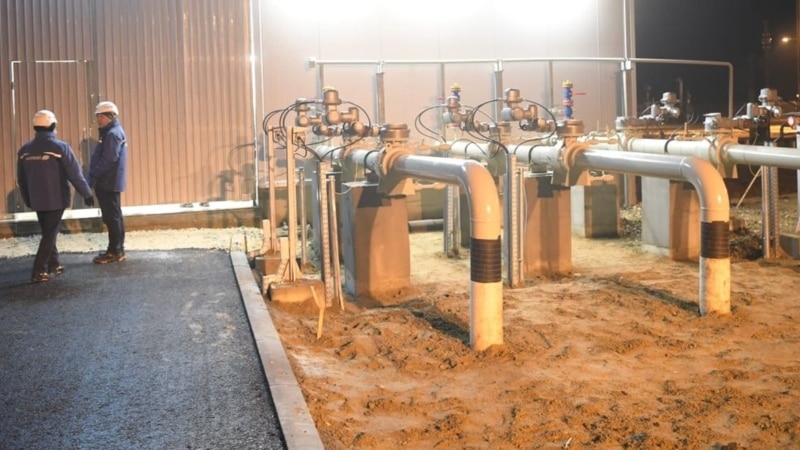
Explosives Found Near Key Gas Pipeline To Hungary, Serbia Says
#explosives #gas pipeline #Serbia #Hungary #energy security #infrastructure #investigation
📌 Key Takeaways
- Serbia reports discovery of explosives near a major gas pipeline to Hungary
- The pipeline is a critical energy supply route for Hungary
- Incident raises security concerns over European energy infrastructure
- Authorities are investigating the origin and intent behind the explosives
📖 Full Retelling
🏷️ Themes
Energy Security, Infrastructure Threat
📚 Related People & Topics

Serbia
Country in Southeast and Central Europe
Serbia, officially the Republic of Serbia, is a landlocked country in Southeast and Central Europe. Located in the Balkans, it borders Hungary to the north, Romania to the northeast, Bulgaria to the southeast, North Macedonia to the south, Croatia to the northwest, Bosnia and Herzegovina to the west...

Hungary
Country in Central Europe
Hungary is a landlocked country in Central Europe. Spanning much of the Carpathian Basin, it is bordered by Slovakia to the north, Ukraine to the northeast, Romania to the east and southeast, Serbia to the south, Croatia and Slovenia to the southwest, and Austria to the west. Hungary lies within the...
Entity Intersection Graph
Connections for Serbia:
View full profileMentioned Entities
Deep Analysis
Why It Matters
This discovery of explosives near a critical energy infrastructure threatens regional energy security and stability. It directly affects Hungary's energy supply, which relies on this pipeline for natural gas, potentially impacting millions of citizens and industries. The incident raises serious security concerns about the vulnerability of Europe's energy networks amid ongoing geopolitical tensions. It also affects Serbia's reputation as a reliable energy transit country and could strain diplomatic relations in the region.
Context & Background
- The pipeline in question is part of the Balkan Stream pipeline system, which transports Russian natural gas through Serbia to Hungary and other European countries.
- Hungary depends heavily on Russian natural gas, with approximately 85% of its gas imports coming from Russia via various pipeline routes including through Serbia.
- Energy infrastructure security has become a major concern in Europe since the 2022 Nord Stream pipeline explosions in the Baltic Sea, which remain unsolved.
- Serbia maintains close political and economic ties with Russia despite EU sanctions, positioning itself as an important energy transit route between Russia and parts of Europe.
- The Balkan region has experienced multiple incidents of energy infrastructure sabotage or threats since Russia's invasion of Ukraine in 2022.
What Happens Next
Serbian authorities will likely conduct a thorough investigation with possible international assistance to determine the origin and intended purpose of the explosives. Hungary may temporarily increase alternative energy supplies or draw from reserves while security assessments continue. The incident will probably lead to enhanced security measures along energy infrastructure throughout the region, with possible NATO or EU involvement in protection efforts. Diplomatic discussions between Serbia, Hungary, and potentially Russia will occur regarding pipeline security and energy supply guarantees.
Frequently Asked Questions
The explosives were found near the Balkan Stream pipeline, which carries Russian natural gas through Serbia to Hungary. This pipeline is crucial for Hungary's energy supply, providing a significant portion of the country's natural gas needs for heating and industry.
No group has claimed responsibility yet. Possible suspects include anti-Russian groups opposing energy cooperation with Russia, domestic extremists in Serbia, or external actors seeking to destabilize European energy security. Serbian authorities will need to conduct forensic investigations to determine origins.
Hungary may experience temporary supply concerns if the pipeline needs to be shut down for security checks. The country will likely activate contingency plans including increased imports from other sources, use of storage reserves, and potential requests for EU solidarity mechanisms to ensure continuous supply.
Energy pipelines typically have physical security patrols, surveillance systems, and monitoring technology. However, the vast length of pipelines makes complete protection challenging. Following this incident, Serbia and Hungary will probably increase patrols, install additional sensors, and potentially involve military units in protection.
This incident follows the unsolved 2022 Nord Stream pipeline explosions and other energy infrastructure incidents across Europe. It suggests a pattern of targeting critical energy infrastructure, possibly as a method of geopolitical pressure or sabotage during times of international tension over energy resources.
The incident will require careful diplomatic handling between Serbia, Hungary, Russia, and the EU. Serbia must demonstrate it can secure transit infrastructure, while Hungary needs assurance of supply continuity. Russia may use the incident to argue for increased security cooperation or alternative routing arrangements.