
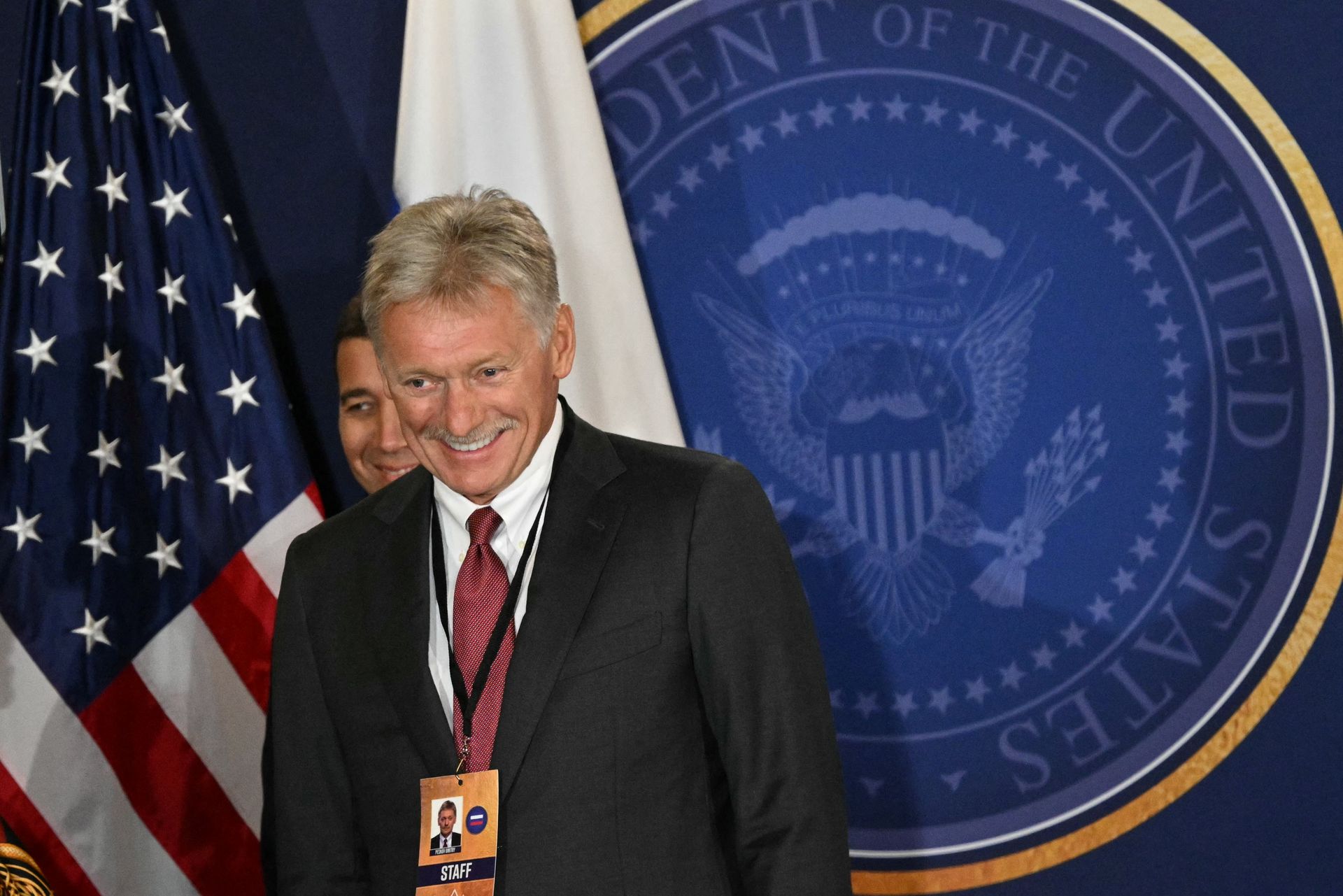
'Only on Russia's terms' — Kremlin criticizes US proposals on economic deals
#Russia #Kremlin #US #economic deals #diplomacy #sanctions #negotiations
📌 Key Takeaways
- Kremlin rejects US economic proposals, insisting deals must align with Russian terms.
- Russia criticizes US approach as unacceptable, highlighting ongoing diplomatic tensions.
- The statement reflects Russia's firm stance on economic negotiations amid geopolitical strains.
- Disagreement underscores broader conflicts in US-Russia relations over trade and sanctions.
📖 Full Retelling
🏷️ Themes
Geopolitics, Economic Relations
📚 Related People & Topics

Russia
Country in Eastern Europe and North Asia
Russia, or the Russian Federation, is a country in Eastern Europe and North Asia. It is the largest country in the world, spanning eleven time zones and sharing land borders with fourteen countries. With a population of over 140 million, Russia is the most populous country in Europe and the ninth-mo...

Kremlin
Fortified complex in Moscow, Russia
The Moscow Kremlin, commonly known as just the Kremlin, is a fortified complex in Moscow, Russia. Located in the centre of the country's capital city, the Moscow Kremlin comprises five palaces, four cathedrals, and the enclosing Kremlin Wall along with the Kremlin towers. In the complex is the Grand...

United States
Country primarily in North America
The United States of America (USA), also known as the United States (U.S.) or America, is a country primarily located in North America. It is a federal republic of 50 states and a federal capital district, Washington, D.C. The 48 contiguous states border Canada to the north and Mexico to the south, ...
Entity Intersection Graph
Connections for Russia:
Mentioned Entities
Deep Analysis
Why It Matters
This news matters because it reveals the deepening diplomatic stalemate between Russia and the United States, which affects global economic stability and international relations. It impacts countries and businesses involved in trade with Russia, as well as global markets sensitive to geopolitical tensions. The hardening positions suggest reduced prospects for conflict resolution in Ukraine and could lead to further economic fragmentation between Western and Russian-aligned blocs.
Context & Background
- Russia-U.S. relations have been severely strained since Russia's 2014 annexation of Crimea and the 2022 full-scale invasion of Ukraine
- The U.S. and allies have imposed extensive economic sanctions on Russia targeting energy, finance, and technology sectors
- Previous diplomatic efforts like the Minsk agreements and various ceasefire attempts have failed to resolve the Ukraine conflict
- Russia has increasingly turned to alternative economic partnerships with China, India, and Middle Eastern countries amid Western sanctions
What Happens Next
Expect continued diplomatic deadlock with no immediate breakthroughs in negotiations. Russia will likely intensify economic cooperation with non-Western partners through BRICS and bilateral agreements. The U.S. and EU may announce additional sanctions packages in coming months, particularly targeting Russian energy exports and financial networks. Watch for Russia's response at upcoming international forums like the UN General Assembly in September.
Frequently Asked Questions
Russia likely demands recognition of its territorial gains in Ukraine, lifting of key Western sanctions, and restoration of normal trade relations without political preconditions. They also seek guarantees for their security interests in Eastern Europe.
Continued tensions maintain volatility in oil and gas prices as Russian exports face restrictions. Europe's energy transition accelerates while Russia redirects exports to Asia, reshaping global energy trade patterns.
China, Turkey, and some Global South nations have attempted mediation but with limited success. The fundamental disagreement over Ukraine's sovereignty makes third-party mediation challenging without major policy shifts.
Prolonged confrontation risks permanent fragmentation of global economic systems, increased military spending diverting from social needs, and potential accidental escalation due to reduced diplomatic channels.
Ordinary Russians face higher inflation, reduced access to Western goods and technology, and limited economic opportunities due to sanctions. However, government social spending and alternative imports partially mitigate these effects.