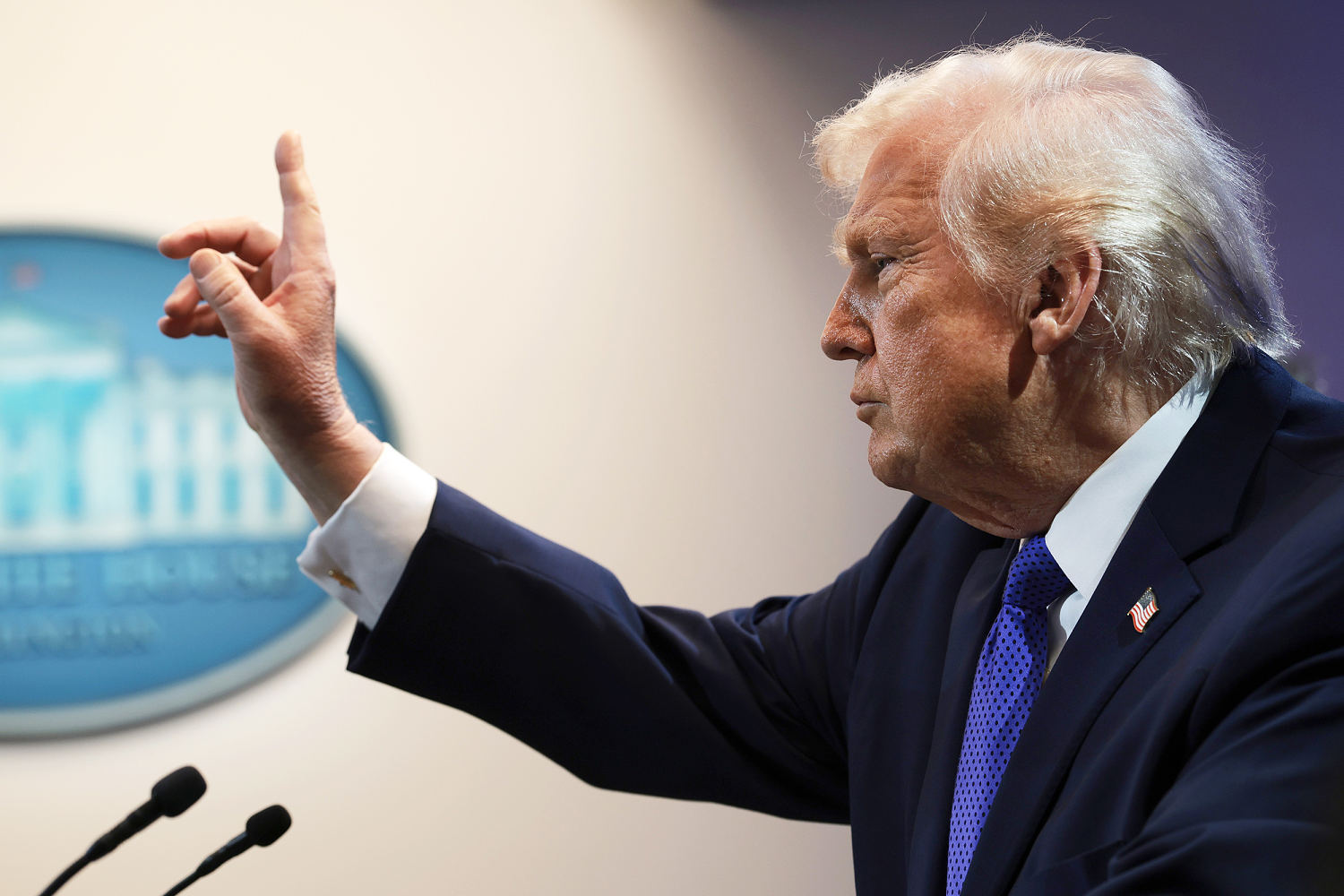
Trump increased global tariff from 10% to 15% after Supreme Court invalidated most country-specific tariffs
European leaders expressed alarm and called for unity in response to the tariff hike
The tariff changes create uncertainty in global markets and represent a reduction for major trading partners
Europe has grown accustomed to Trump's shifting tariff threats during his administration
Trump's upcoming visit to China in March will likely focus on trade issues
📖 Full Retelling
President Donald Trump announced a hike in his global tariff from 10% to 15% on Saturday, February 22, 2026, in Washington, following a Supreme Court ruling that invalidated most of his country-by-country tariffs, which Trump claimed were necessary because other nations have been 'ripping' the U.S. off for decades. European leaders across the continent voiced alarm and frustration at the sudden policy shift, with German Chancellor Friedrich Merz warning of the 'poison' of tariff uncertainty and French President Emmanuel Macron emphasizing the need for fair reciprocal trade rules rather than unilateral decisions. The tariff increase came less than 24 hours after Trump initially announced a 10% worldwide duty, creating confusion among America's trading partners who have grown accustomed to the administration's rapidly evolving trade positions.
The European response demonstrated a continent attempting to present a united front against the unpredictable tariff policy. French Trade Minister Nicolas Forissier explicitly stated that Europe possesses tools to retaliate and called for coordinated action among EU members, while Chancellor Merz confirmed he would approach Washington with a unified European position. The UK government, meanwhile, expressed confidence in maintaining its 'privileged trading position' with the United States despite the turmoil. These reactions follow a pattern established during Trump's second administration, where European leaders have repeatedly negotiated with Washington over shifting tariff threats, including an incident in January when Trump threatened sweeping tariffs on European allies unless Denmark handed over Greenland.
The Supreme Court ruling that prompted Trump's universal tariff approach invalidated most existing U.S. tariffs except for sector-specific duties on automobiles, car parts, and semiconductor chips. While the new 15% universal rate represents a significant reduction for America's top trading partners including Mexico, Canada, and China, it introduces new uncertainty into global markets. Analysts suggest Europe's relatively muted response this time might be tactical, as leaders await further developments while maintaining support on Ukraine issues. Trump's scheduled visit to China at the end of March, where tariffs are expected to be a focal point in discussions with President Xi Jinping, adds another layer of complexity to the evolving trade landscape, with both sides potentially reluctant to escalate tensions before the diplomatic meeting.
🏷️ Themes
Trade Policy, International Relations, Economic Uncertainty, Diplomatic Response
International trade is the exchange of capital, goods, and services across international borders or territories because there is a need or want of goods or services.
In most countries, such trade represents a significant share of gross domestic product (GDP). While international trade has existed t...
The sudden tariff increase from 10% to 15% creates significant economic uncertainty for global trade partners. This marks another escalation in Trump's trade policies that could trigger retaliatory measures from European allies. The rapid policy shifts undermine stable international trade relationships and threaten global economic stability.
Context & Background
Trump initially announced 10% global tariff after Supreme Court struck down country-specific tariffs
European leaders have faced similar tariff threats throughout Trump's second administration
EU has 'Anti-Coercion Instrument' that could target US goods with restrictions
Supreme Court ruling invalidated most existing tariffs except sector-specific duties
What Happens Next
European leaders will coordinate a unified response and potentially deploy trade countermeasures. Trump is scheduled to meet with Chinese President Xi Jinping in March where tariffs will be a key discussion topic. The UK will seek to maintain its privileged trading position while supporting businesses through the changes.
Frequently Asked Questions
Why did Trump increase the tariff from 10% to 15%?
Trump stated he was raising the tariff to the fully allowed and legally tested 15% level against countries he claims have been ripping off the US for decades.
How are European countries responding?
European leaders are calling for unity and considering coordinated responses, with Germany's chancellor warning about the poison of uncertainty and France considering reciprocal measures.
What was the Supreme Court's role in this situation?
The Supreme Court struck down most of Trump's country-by-country tariffs, leading him to implement a blanket global tariff instead.
}
Original Source
A familiar uncertainty as the world grapples with fresh Trump tariff turmoil Uncertainty is not a new position for European leaders, who have spent much of Trump’s second administration negotiating with Washington over frequently evolving tariff threats. President Donald Trump speaks during a press briefing held at the White House on Friday. Anna Moneymaker / Getty Images Share Add NBC News to Google Feb. 22, 2026, 10:02 AM EST By Freddie Clayton Listen to this article with a free account 00:00 00:00 U.S. allies across Europe voiced alarm and frustration after President Donald Trump said Saturday that he was hiking his newly announced global tariff to 15% , less than a day after announcing a 10% worldwide duty. On Friday, Trump announced the blanket 10% import tax for all foreign trading partners after most of his sweeping country-by-country tariffs were struck down by the Supreme Court . One day later, he said in a Truth Social post that he would be immediately “raising the 10% Worldwide Tariff on Countries, many of which have been ‘ripping’ the U.S. off for decades, without retribution (until I came along!), to the fully allowed, and legally tested, 15% level.” The United States’ European allies , now more than familiar with Trump’s rapidly shifting tariff threats after more than a year of diplomacy, criticized the new measures and called for unity across the continent. In Saturday remarks made before Trump announced the 15% rate, German Chancellor Friedrich Merz warned of the “poison” of more uncertainty around tariffs. “I will go to Washington with a coordinated European position,” he told reporters on Saturday, according to Reuters. “The biggest poison for the economies of Europe and the U.S. is this constant uncertainty about tariffs. And this uncertainty must end,” Merz added. French President Emmanuel Macron said his government would “will look exactly at the consequences, what can be done, and we will adapt.” He also made the comments before Trump’s new tar...