
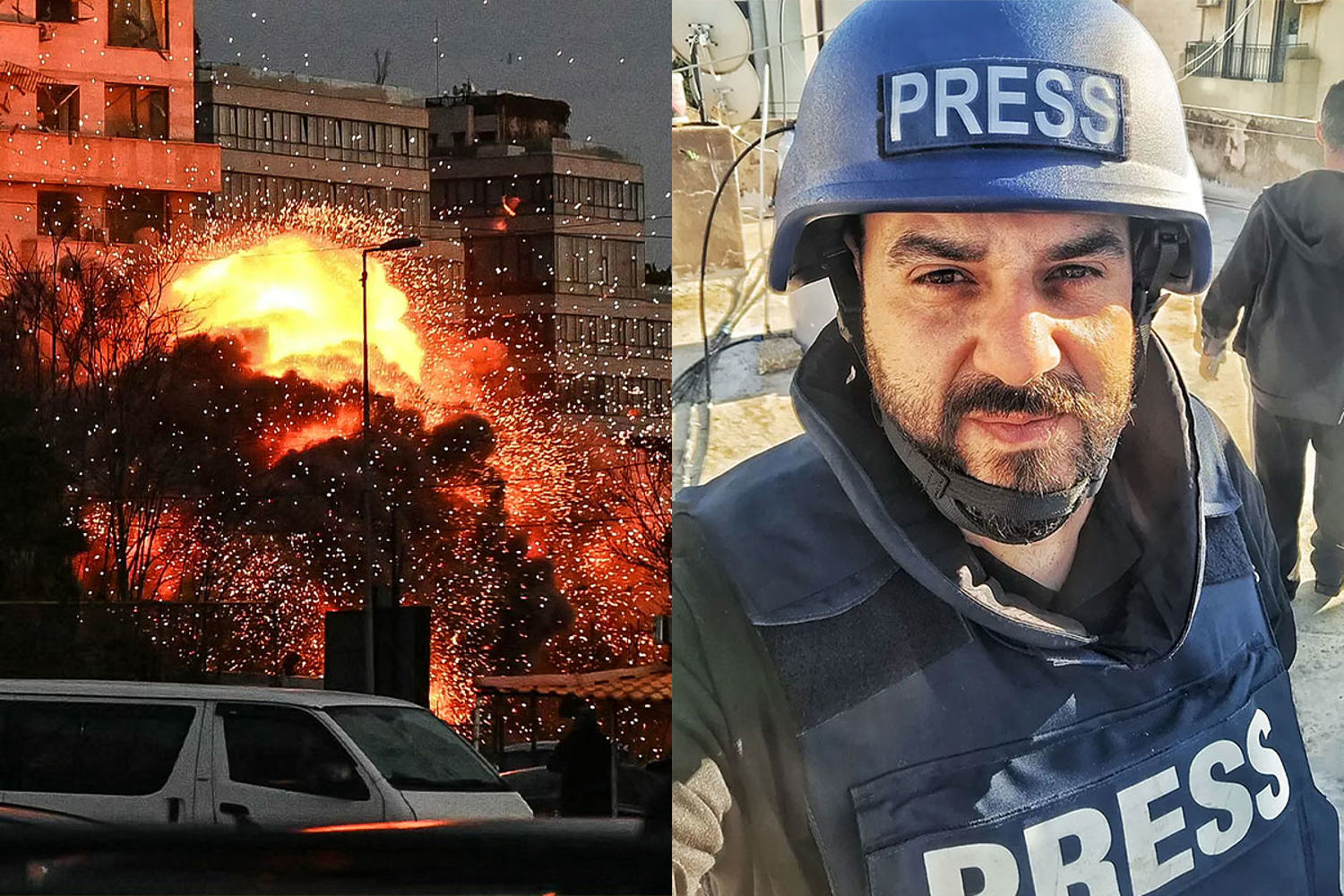
Beirut photographer puts himself in the firing line to capture Israeli strikes
#Beirut #photographer #Israeli strikes #airstrikes #conflict #documentation #risk #journalism
📌 Key Takeaways
- A photographer in Beirut risks personal safety to document Israeli airstrikes.
- The photographer's work captures the immediate impact of strikes on the city.
- The images aim to provide visual evidence of the conflict's human toll.
- The photographer operates in dangerous conditions to record events.
📖 Full Retelling
🏷️ Themes
Conflict Journalism, Photography
📚 Related People & Topics

Beirut
Capital and largest city of Lebanon
Beirut ( bay-ROOT; Arabic: بيروت, romanised: ) is the capital and largest city of Lebanon. As of 2025 Greater Beirut has a population of 2.4 million, just under half of Lebanon's population, which makes it the twelfth-largest city in the Levant region and the sixteenth-largest in the Arab world. Th...

Israeli Air Force
Aerial and space service branch of the Israel Defense Forces
The Israeli Air Force (IAF; Hebrew: זְרוֹעַ הָאֲוִיר וְהֶחָלָל, romanized: Zroa HaAvir VeHahalal, lit. 'Air and Space Arm', commonly known as חֵיל הָאֲוִיר, Kheil HaAvir, "Air Corps") operates as the aerial and space warfare branch of the Israel Defense Forces (IDF). It was founded on May 28, 1948,...
Entity Intersection Graph
Connections for Beirut:
Mentioned Entities
Deep Analysis
Why It Matters
This news highlights the dangerous reality for journalists covering conflict zones, particularly in the Middle East where Israeli-Lebanese tensions have escalated. It matters because it showcases the human cost of war reporting and the risks journalists take to document violence that might otherwise go unseen. The story affects not only the photographer and his family, but also international audiences who rely on such documentation to understand conflicts, policymakers who use this evidence in decision-making, and press freedom advocates concerned about journalist safety in war zones.
Context & Background
- Israeli-Lebanese tensions have existed since Israel's founding in 1948, with major conflicts occurring in 1982, 2006, and periodic flare-ups since
- Hezbollah, the Iran-backed militant group based in Lebanon, has been engaged in cross-border exchanges with Israel since the October 7 Hamas attacks on Israel
- Lebanon has experienced severe economic collapse since 2019, with its currency losing over 95% of value and most citizens living in poverty
- Journalist casualties in conflict zones have risen dramatically in recent years, with over 100 killed in the Israel-Gaza conflict alone since October 2023
- Beirut was devastated by a massive port explosion in 2020 that killed over 200 people and destroyed much of the city's infrastructure
What Happens Next
Increased international attention on journalist safety in conflict zones may lead to renewed calls for protective measures. The photographer's work could influence diplomatic discussions about the humanitarian impact of cross-border strikes. If tensions escalate further between Israel and Hezbollah, we may see more journalists taking similar risks to document the conflict, potentially leading to more casualties among media personnel.
Frequently Asked Questions
Conflict photographers believe documenting violence serves as historical record, raises international awareness, and can pressure policymakers to act. Many feel a moral obligation to show the human impact of war that official sources might minimize or ignore. Their work provides evidence that can be used in future accountability processes.
Extremely dangerous - Lebanon ranks among the most perilous countries for journalists due to ongoing cross-border strikes, political instability, and economic collapse. Journalists face risks from direct military action, collateral damage, and potential targeting by various armed groups. Many work without adequate protective equipment or insurance.
Relations remain hostile with regular cross-border exchanges between Israeli forces and Hezbollah militants. The situation has deteriorated since October 2023, with both sides conducting strikes that have killed civilians and displaced thousands. Diplomatic efforts to de-escalate have so far failed to establish lasting calm.
Lebanese civilians face constant threat of strikes, economic devastation, and displacement. Many in southern Lebanon have already fled their homes, while those remaining live with daily anxiety about attacks. The conflict exacerbates Lebanon's existing economic crisis, making basic survival increasingly difficult for most citizens.
International humanitarian law theoretically protects journalists as civilians, but these protections are frequently violated. Some organizations provide safety training and protective equipment, but enforcement mechanisms are weak. Many journalists operate without institutional support, making them particularly vulnerable to harm.