
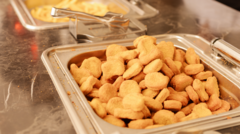
Chicken in many school dinners imported from China and Thailand
#Wales #School Dinners #Chicken Import #China #Thailand #Supply Chain #Local Sourcing #Food Sustainability
📌 Key Takeaways
- Large quantities of chicken in Welsh school meals are being sourced from China and Thailand instead of local farms.
- The practice is driven by the need to manage limited education budgets amidst rising food costs.
- Specific regions, including Pembrokeshire and Conwy, have been identified as high importers of these poultry products.
- Critics and environmentalists have raised concerns regarding the carbon footprint and lack of support for UK agriculture.
📖 Full Retelling
Education authorities and catering departments across several Welsh counties have come under scrutiny this week following revelations that significant quantities of chicken served in school dinners are being imported from China and Thailand. Local government reports indicate that schools in regions such as Pembrokeshire, Conwy, and Gwynedd are sourcing poultry from Asia primarily to navigate tightening budgetary constraints and rising food inflation while maintaining nutritional requirements. This logistical strategy has sparked a debate regarding the environmental footprint of importing meat from thousands of miles away and the transparency of food supply chains within the United Kingdom’s public sector.
The prevalence of Asian-imported poultry is particularly high in specific Welsh councils, where complex procurement contracts prioritize cost-efficiency over local sourcing. While the meat meets the required UK safety standards, critics argue that the practice contradicts government pledges to support local farmers and reduce carbon emissions associated with long-distance food transportation. Investigative findings show that while some councils aim for British-reared meat, the reality of 'frozen-at-source' imports remains a staple for many primary and secondary school kitchens that struggle with limited funding.
Agricultural organizations and parents' groups have expressed concern over the discrepancy between healthy eating initiatives and the environmental reality of these global supply routes. They argue that the carbon cost of transporting chicken from Thailand and China undermines the sustainability goals taught in classrooms. In response, some local authorities have promised to review their procurement policies, though they remain cautious, noting that a complete shift to 100% British poultry would require a significant increase in the annual school meal budget provided by the Welsh government.
🏷️ Themes
Education, Environment, Agriculture, Public Procurement
Entity Intersection Graph
No entity connections available yet for this article.