
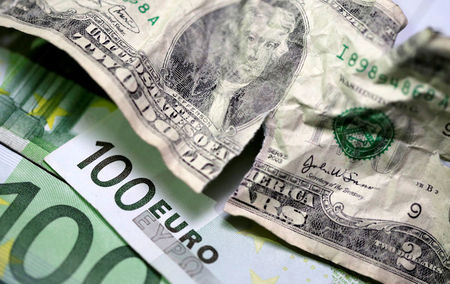
Dollar set for best weekly advance in nearly a month; euro, sterling rise
#US Dollar #Federal Reserve #Euro #British Pound #Interest Rates #Inflation #Foreign Exchange #Economic Data
📌 Key Takeaways
- The US dollar recorded its best weekly performance in nearly a month.
- The euro and British pound saw slight recoveries on Friday despite overall dollar strength.
- Resilient US economic data has led investors to expect fewer interest rate cuts from the Fed.
- Divergent central bank policies between the US, UK, and EU are driving currency volatility.
📖 Full Retelling
Global currency markets saw the US dollar on track for its strongest weekly performance in nearly a month as of Friday afternoon in London, driven by shifting expectations surrounding Federal Reserve interest rate policy and resilient economic indicators. Despite intraday gains from the euro and British pound, the greenback maintained a dominant position throughout the week of October 18, 2024, as investors sought safety amidst geopolitical uncertainty and adjusted their forecasts for more cautious rate cuts by the U.S. central bank. The dollar's surge reflects a broader recalibration of global financial markets as inflationary pressures show signs of persistence in the American economy.
While the dollar index signaled a period of robust strength, both the euro and the British pound managed to recover some ground during the final trading sessions of the week. Analysts point to a complex interplay of central bank rhetoric and domestic data; in the United Kingdom, inflation figures fell more sharply than expected, fueling speculation that the Bank of England might accelerate its own easing cycle. Conversely, the Eurozone continues to struggle with sluggish growth, though the euro’s slight uptick against the dollar late in the week provided a brief respite from its recent downward trend.
Market participants are currently focused on the divergent paths of major central banks, as the Federal Reserve appears more hawkish compared to its European and British counterparts. Recent data suggests that the U.S. economy is performing better than many developed peers, which reduces the immediate pressure on Chairman Jerome Powell to implement deep interest rate reductions. This disparity has provided the technical foundation for the dollar's weekly advance, attracting capital inflows into dollar-denominated assets as yields remain comparatively attractive.
Looking ahead, the volatility in the currency pairs suggests that the 'higher for longer' interest rate narrative remains a potent force in global finance. Traders are now closely monitoring upcoming manufacturing and services data from Europe and the U.S. to determine if the dollar's momentum will carry into the next month. For now, the combination of a robust domestic labor market and geopolitical tensions in the Middle East continues to bolster the greenback’s status as the primary global reserve currency, even as traditional rivals like sterling and the euro attempt to find a floor.
🏷️ Themes
Global Economy, Monetary Policy, Currency Markets
Entity Intersection Graph
No entity connections available yet for this article.