
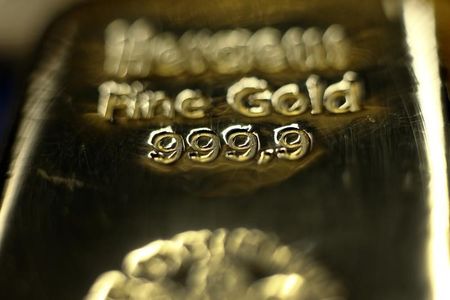
Gold, silver prices dip after strong payrolls dent rate cut bets
#Gold prices #Silver market #Federal Reserve #Non-farm payrolls #Interest rates #US Dollar #Commodity trading
📌 Key Takeaways
- Gold and silver prices dropped sharply following a stronger-than-expected U.S. jobs report.
- The robust employment data reduced the probability of a large interest rate cut by the Federal Reserve in the near future.
- A strengthening U.S. dollar and rising Treasury yields increased the opportunity cost of holding non-yielding assets.
- Market participants are recalibrating their expectations for monetary easing as the U.S. labor market shows continued resilience.
📖 Full Retelling
Global investors pushed gold and silver prices lower on international commodity markets this Friday following the release of unexpectedly robust U.S. non-farm payrolls data, which significantly dampened expectations for an aggressive interest rate cut by the Federal Reserve. The Bureau of Labor Statistics reported job growth that far exceeded economist projections, signaling a resilient labor market that provides the central bank with more leeway to maintain higher borrowing costs for a longer duration. This shift in sentiment immediately bolstered the U.S. dollar and Treasury yields, creating downward pressure on non-yielding precious metals.
Gold, which typically functions as a hedge against economic uncertainty and thrives in low-interest-rate environments, saw its spot price tumble as the likelihood of a 50-basis-point cut in November faded. According to market analysts, the strong employment figures suggest that the U.S. economy is far from a recessionary spiral, contradicting the previous narrative that had fueled gold’s record-breaking rally earlier this year. Silver followed the downward trend of its yellow counterpart, suffering even sharper percentage losses as industrial demand concerns mingled with the shifting monetary outlook.
The reaction in the metals market highlights the extreme sensitivity of bullion to Federal Reserve policy shifts and macroeconomic indicators. Before the payrolls report, traders had heavily priced in more accommodative stances, but the new data has forced a recalibration of portfolios. Higher interest rates increase the opportunity cost of holding gold and silver, as they offer no dividends or interest, making traditional fixed-income assets like bonds more attractive to institutional and retail investors alike.
Financial experts suggest that while the immediate reaction was a sell-off, the long-term trajectory for precious metals remains tied to geopolitical tensions and central bank buying patterns. However, for the short term, the spotlight remains firmly on the Federal Reserve's next move. As the dollar gains strength against a basket of currencies, gold is expected to test new support levels, with market participants closely watching upcoming inflation data to see if the cooling trend in consumer prices persists despite the heat in the labor market.
🏷️ Themes
Economy, Commodities, Monetary Policy
Entity Intersection Graph
No entity connections available yet for this article.