
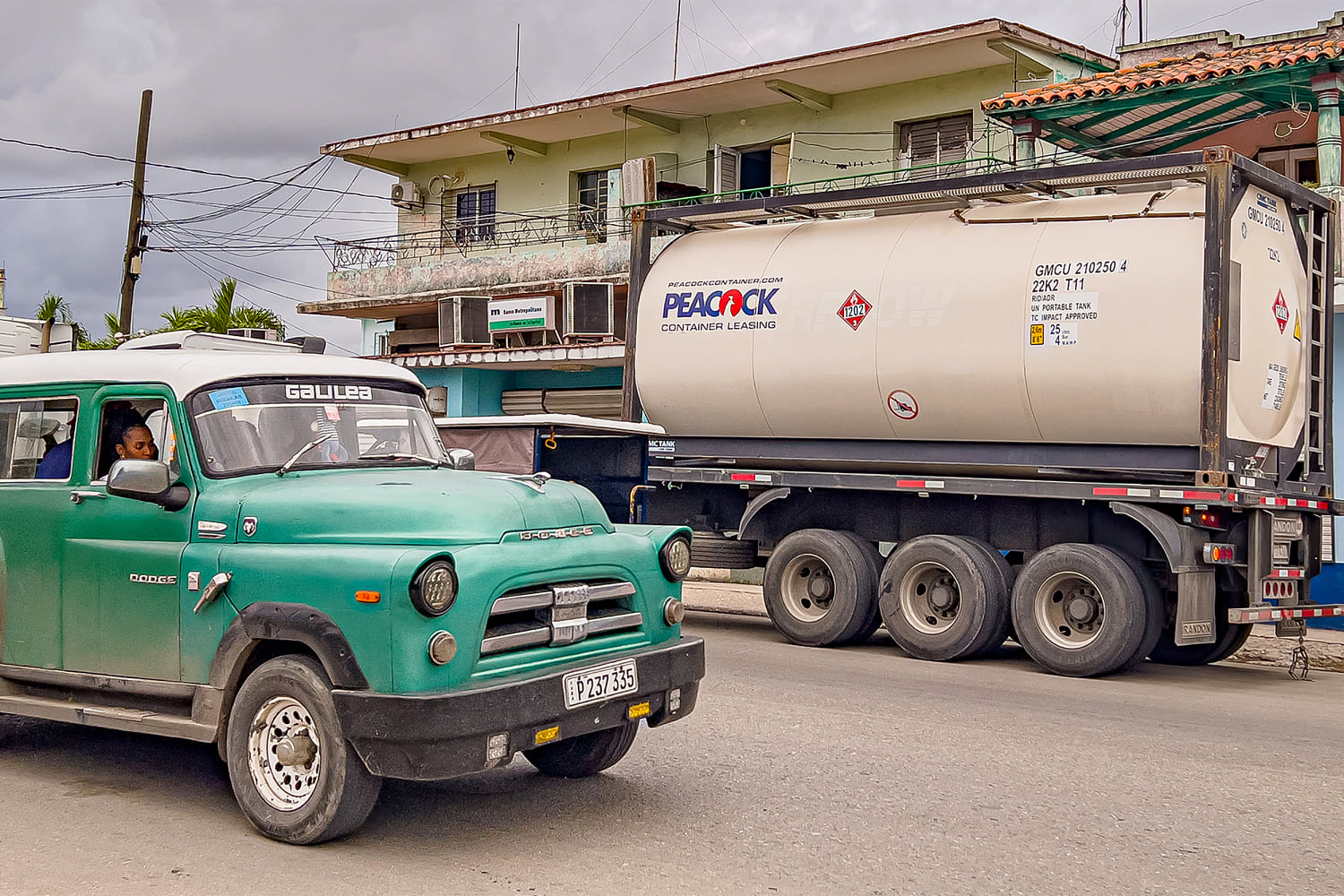
In Cuba, all-night lines for 5 gallons of gas as residents grapple with shortages
#Cuba #gasoline shortage #fuel lines #economic crisis #resource scarcity
📌 Key Takeaways
- Cubans are enduring overnight waits to purchase limited gasoline supplies.
- The country is facing severe fuel shortages affecting daily life and transportation.
- Residents are struggling to access basic necessities due to the scarcity.
- The situation highlights broader economic challenges and resource constraints in Cuba.
📖 Full Retelling
🏷️ Themes
Fuel Crisis, Economic Hardship
📚 Related People & Topics

Cuba
Country in the Caribbean
Cuba, officially the Republic of Cuba, is an island country in the Caribbean. It comprises the eponymous main island as well as 4,195 islands, islets, and cays. Situated at the convergence of the Caribbean Sea, Gulf of Mexico, and Atlantic Ocean, Cuba is located east of the Yucatán Peninsula, south ...
Entity Intersection Graph
Connections for Cuba:
Mentioned Entities
Deep Analysis
Why It Matters
This news highlights Cuba's severe fuel crisis that directly impacts daily life for all 11 million residents, disrupting transportation, commerce, and essential services. The shortages reflect broader economic challenges facing the communist-run island nation, including reduced Venezuelan oil shipments and U.S. sanctions. This situation threatens to deepen Cuba's economic crisis, potentially leading to increased social unrest and migration pressures that could affect regional stability.
Context & Background
- Cuba has depended heavily on subsidized oil from Venezuela since the 2000s, receiving over 100,000 barrels daily at its peak
- The country has faced chronic fuel shortages since 2019 when Venezuela's economic collapse reduced oil shipments by approximately 50%
- Cuba's economy shrank by 10.9% in 2020 during the pandemic and has struggled to recover, with inflation exceeding 30% in recent years
- The U.S. embargo, in place since 1962, restricts Cuba's access to international financial systems and makes fuel imports more difficult and expensive
- Cuba maintains a dual currency system with special treatment for tourism dollars, creating economic distortions that exacerbate shortages for ordinary citizens
What Happens Next
The Cuban government will likely implement stricter rationing measures in coming weeks while seeking emergency fuel shipments from allies like Russia, Mexico, or Algeria. Expect increased social tensions and possible protests if shortages persist beyond October 2023. The situation may force Cuba to accelerate economic reforms, potentially including further devaluation of the peso and reduced subsidies, though significant policy changes before year-end appear unlikely given political constraints.
Frequently Asked Questions
Cuba faces severe foreign currency shortages and limited credit access due to U.S. sanctions, making large fuel purchases difficult. The country's traditional supplier Venezuela has reduced shipments due to its own economic crisis, while alternative suppliers demand payment in hard currency that Cuba lacks.
Fuel shortages paralyze public transportation, disrupt food distribution, and cause power outages that affect refrigeration and cooking. Many Cubans spend hours daily waiting for transportation or essential goods, reducing productivity and increasing economic hardship for families already struggling with food shortages.
The government has implemented rationing, prioritized fuel for essential services, and is seeking emergency shipments from allies. Officials are also encouraging bicycle use and carpooling while blaming U.S. sanctions for the crisis, though critics argue inefficient state management contributes significantly to the problem.
While fuel crises have sparked protests in the past (notably in July 2021), the government maintains tight control and has shown little willingness for political reform. More likely outcomes include accelerated but limited economic adjustments rather than systemic political change, though prolonged hardship increases pressure on the one-party system.
Tourism receives priority fuel allocation to generate hard currency, creating resentment among Cubans who see tourists enjoying reliable transportation while locals face shortages. This two-tier system reflects Cuba's economic dependence on tourism dollars but exacerbates social inequalities and public frustration.