
Iranians celebrate as Mojtaba Khamenei named new supreme leader
#Iran #Mojtaba Khamenei #supreme leader #succession #celebrations #political transition #governance
📌 Key Takeaways
- Mojtaba Khamenei has been appointed as Iran's new supreme leader.
- The announcement has sparked widespread celebrations among Iranians.
- This marks a significant leadership transition in Iran's political structure.
- The succession likely reinforces the influence of the Khamenei family in Iranian governance.
📖 Full Retelling
🏷️ Themes
Leadership Change, Political Succession
📚 Related People & Topics
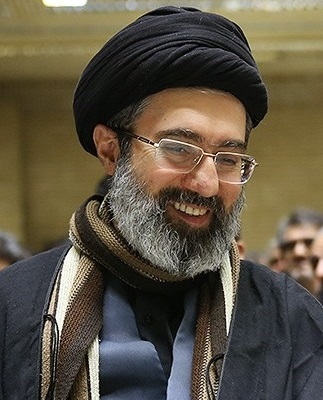
Mojtaba Khamenei
Iranian politician and cleric (born 1969)
Mojtaba Hosseini Khamenei (born 8 September 1969) is an Iranian politician and Muslim cleric. The second eldest child of Ali Khamenei, the former supreme leader of Iran, Mojtaba Khamenei served in the Iran–Iraq War from 1987 to 1988, and also reportedly took control of the Basij that was used to sup...

Iran
Country in West Asia
# Iran **Iran**, officially the **Islamic Republic of Iran** and historically known as **Persia**, is a sovereign country situated in West Asia. It is a major regional power, ranking as the 17th-largest country in the world by both land area and population. Combining a rich historical legacy with a...
Entity Intersection Graph
Connections for Mojtaba Khamenei:
Mentioned Entities
Deep Analysis
Why It Matters
This news is critically important because it signals a major transition in Iran's political and religious leadership, affecting both domestic governance and international relations. The appointment of Mojtaba Khamenei as supreme leader would determine Iran's future direction on nuclear policy, regional conflicts, and relations with Western nations. This affects not only Iran's 85 million citizens but also global security dynamics, Middle Eastern stability, and energy markets worldwide.
Context & Background
- The current Supreme Leader Ali Khamenei has held power since 1989 following the death of Ayatollah Ruhollah Khomeini, making him Iran's longest-serving head of state.
- The Supreme Leader is Iran's highest authority with ultimate control over military, judiciary, media, and foreign policy, operating above the elected president and parliament.
- Succession planning has been a sensitive topic in Iran for years, with speculation about whether leadership would pass to Mojtaba Khamenei (the current leader's son) or other senior clerics.
- Iran's political system blends theocratic and republican elements, with the Assembly of Experts constitutionally responsible for selecting the Supreme Leader.
- Mojtaba Khamenei has been a influential behind-the-scenes figure for years, reportedly involved in security and intelligence matters while maintaining low public visibility.
What Happens Next
If confirmed, Mojtaba Khamenei would need to consolidate power among competing factions within Iran's political and religious establishment. International observers will closely monitor early policy decisions regarding nuclear negotiations, regional proxy conflicts, and domestic protests. The transition may trigger internal power struggles between reformists, conservatives, and hardliners vying for influence under the new leadership.
Frequently Asked Questions
Mojtaba Khamenei is the second son of current Supreme Leader Ali Khamenei, born in 1969. He has studied Islamic theology in Qom seminaries and has been involved in Iran's security apparatus, though he holds no official government position. His qualifications stem from religious education and decades of experience in his father's inner circle rather than public political experience.
The Supreme Leader is selected by the Assembly of Experts, an 88-member body of Islamic scholars elected by the public every eight years. The Assembly evaluates candidates based on their Islamic scholarship, political insight, and personal character. The process is theoretically democratic but heavily influenced by Iran's Guardian Council, which vets all candidates for the Assembly.
Initial changes would likely involve reshuffling key positions in the Revolutionary Guards, judiciary, and media to consolidate power. Policy continuity is expected on core issues like nuclear development and anti-Western stance, though tactics may evolve. Domestic policies might shift depending on whether he aligns with hardline factions or seeks broader consensus.
Regional rivals like Saudi Arabia and Israel will analyze the transition for potential weaknesses or policy shifts. Western nations will watch for changes in nuclear negotiation positions and regional proxy activities. Neighbors and trading partners will assess economic implications, particularly regarding oil exports and regional stability.
Supporters view it as ensuring continuity and stability after decades under his father's leadership. Celebration may reflect relief at avoiding potential power struggles that could accompany an outsider's selection. Some conservatives likely see Mojtaba as a guarantor of revolutionary values against reformist challenges.