
Netanyahu: A ‘ceasefire with Iran will not include Hezbollah’
#Benjamin Netanyahu #ceasefire #Hezbollah #Iran #US-Israel relations #Lebanon #security policy
📌 Key Takeaways
- Netanyahu stated the US-Iran ceasefire deal does not cover Hezbollah.
- He emphasized Israel's independent right to defend itself against the group.
- The declaration highlights Hezbollah's role as a major Iranian proxy threat.
- The move asserts Israeli security policy separate from US diplomacy.
📖 Full Retelling
🏷️ Themes
Middle East Security, Diplomacy, Proxy Conflict
📚 Related People & Topics
Hezbollah
Islamist movement and militant group based in Lebanon
Hezbollah is a Shia Islamist Lebanese political party and paramilitary group. Hezbollah's paramilitary wing is the Jihad Council, and its political wing is the Loyalty to the Resistance Bloc party in the Lebanese Parliament. Its armed strength was assessed to be equivalent to that of a medium-sized ...

Iran
Country in West Asia
# Iran **Iran**, officially the **Islamic Republic of Iran** and historically known as **Persia**, is a sovereign country situated in West Asia. It is a major regional power, ranking as the 17th-largest country in the world by both land area and population. Combining a rich historical legacy with a...
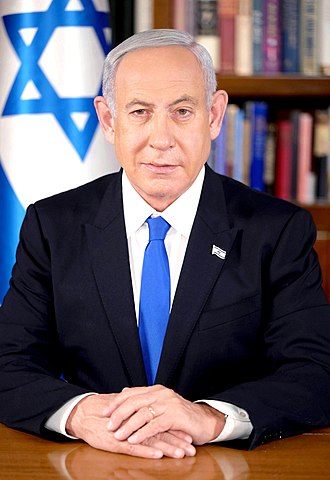
Benjamin Netanyahu
Prime Minister of Israel (1996–1999; 2009–2021; since 2022)
Benjamin "Bibi" Netanyahu (born 21 October 1949) is an Israeli politician and diplomat who has served as Prime Minister of Israel since 2022. Having previously held office from 1996 to 1999 and from 2009 to 2021, Netanyahu is Israel's longest-serving prime minister. Born in Tel Aviv, Netanyahu was r...

Lebanon
Country in West Asia
Lebanon, officially the Lebanese Republic, is a country in the Levant region of West Asia. Situated at the crossroads of the Mediterranean Basin and the Arabian Peninsula, it is bordered by Syria to the north and east, Israel to the south, and the Mediterranean Sea to the west; Cyprus lies a short d...
Entity Intersection Graph
Connections for Hezbollah:
View full profileMentioned Entities
Deep Analysis
Why It Matters
This development highlights a critical divergence between US diplomatic objectives and Israeli security requirements regarding Iran's regional network. It directly affects civilians living near the Israel-Lebanon border, who remain under threat of rocket fire regardless of high-level diplomatic talks. Furthermore, the statement complicates the regional stability landscape by ensuring that active conflict may persist in one theater even if tensions ease in another.
Context & Background
- Hezbollah is a Shia Islamist political party and militant group based in Lebanon, considered a terrorist organization by the US and Israel, and acts as a major proxy for Iran.
- Israel and Hezbollah fought a major war in 2006, and since then, the border has remained tense with periodic skirmishes.
- Hezbollah possesses a massive arsenal of rockets and missiles, estimated to be in the tens of thousands, capable of striking deep into Israeli territory.
- Iran utilizes a 'ring of fire' strategy, surrounding Israel with proxy forces in Lebanon, Syria, Iraq, and Yemen to exert pressure and deterrence.
- The relationship between the US and Israel has occasionally experienced strain regarding how to handle the Iranian nuclear threat and its regional activities.
What Happens Next
Expect continued military posturing and potential targeted strikes by Israel against Hezbollah positions in southern Lebanon or Syria. Diplomatic efforts may face friction as the US pushes for broader de-escalation while Israel maintains its right to self-defense. The Israel-Lebanon border remains a flashpoint with a high risk of escalation into a wider conflict.
Frequently Asked Questions
Netanyahu views Hezbollah as an immediate, direct threat due to its massive rocket arsenal and proximity to the Israeli border, requiring a separate security strategy.
It complicates US diplomacy by demonstrating that a bilateral agreement with Iran does not guarantee stability across the entire Middle East, specifically regarding proxy warfare.
Israel cites its inherent right to self-defense against immediate threats to its sovereignty and civilian population, arguing it cannot rely on external agreements for its security.