
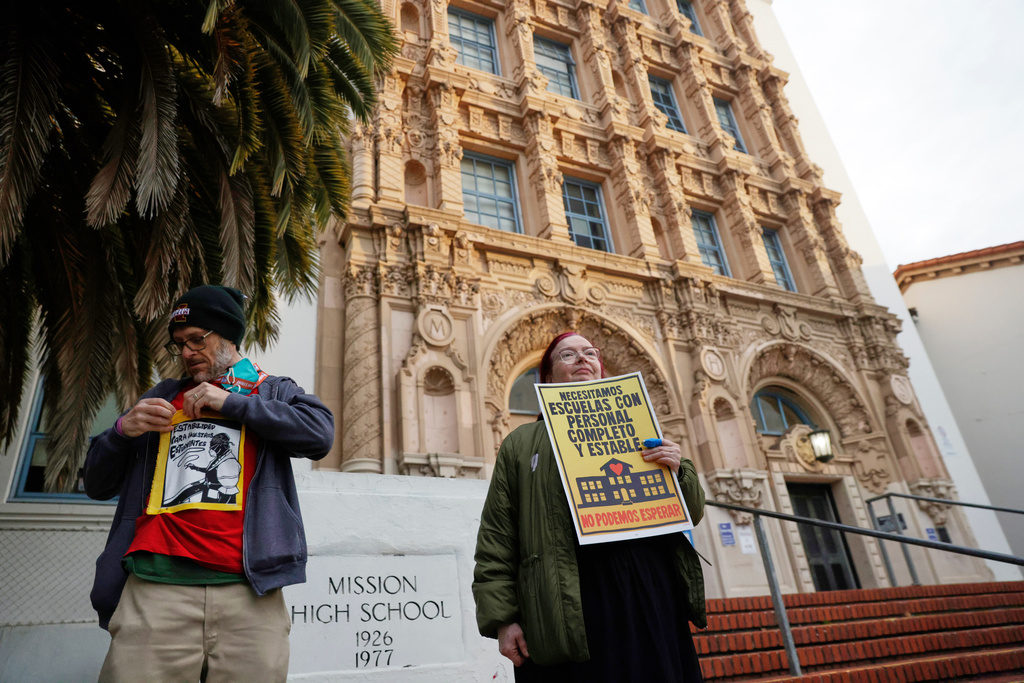
San Francisco teachers strike over wages, health benefits and student resources
#San Francisco #UESF #Teachers strike #SFUSD #Public schools #Contract negotiations #Labor dispute
📌 Key Takeaways
- All 120 San Francisco public schools were closed on Monday due to a widespread teachers' strike.
- The union is demanding higher salary increases and better healthcare to combat the high cost of living.
- Approximately 50,000 students are affected, with only limited independent study options available.
- Negotiations between the school district and the union have reached a temporary deadlock over budget priorities.
📖 Full Retelling
The San Francisco Unified School District (SFUSD) shuttered all 120 of its public schools on Monday after thousands of educators and staff initiated a massive strike across the city to demand higher wages, improved healthcare benefits, and increased resources for students. The labor action, which affected approximately 50,000 students, follows months of unsuccessful contract negotiations between the United Educators of San Francisco (UESF) and district officials. Union leaders argued that the walkout was a necessary last resort to address chronic underfunding and a cost-of-living crisis that has made it increasingly difficult for teachers to reside within the communities they serve.
In response to the total shutdown of physical classrooms, the SFUSD administration offered limited independent study options for a portion of the student body, though the lack of on-site supervision left many parents scrambling for childcare. The district emphasized that while they value their workforce, current budgetary constraints have made it challenging to meet the full scope of the union's financial demands. Meanwhile, picket lines formed outside several major elementary and high schools, with teachers carrying signs highlighting teacher shortages and the need for more specialized support staff, such as counselors and paraprofessionals.
This strike comes amidst a broader national trend of educational labor unrest as public school systems grapple with post-pandemic recovery and inflation. Supporters of the movement point to California's significant budget surplus in previous years, questioning why more of those funds have not reached the classroom level. For now, negotiations remain at a standstill, and it is unclear how long the closures will last. Both parties have expressed a desire to return to the bargaining table, yet the gap between the district’s offer and the union’s requirements for a living wage remains the primary obstacle to reopening the city's schools.
🏷️ Themes
Labor Rights, Education, Economy
Entity Intersection Graph
No entity connections available yet for this article.