
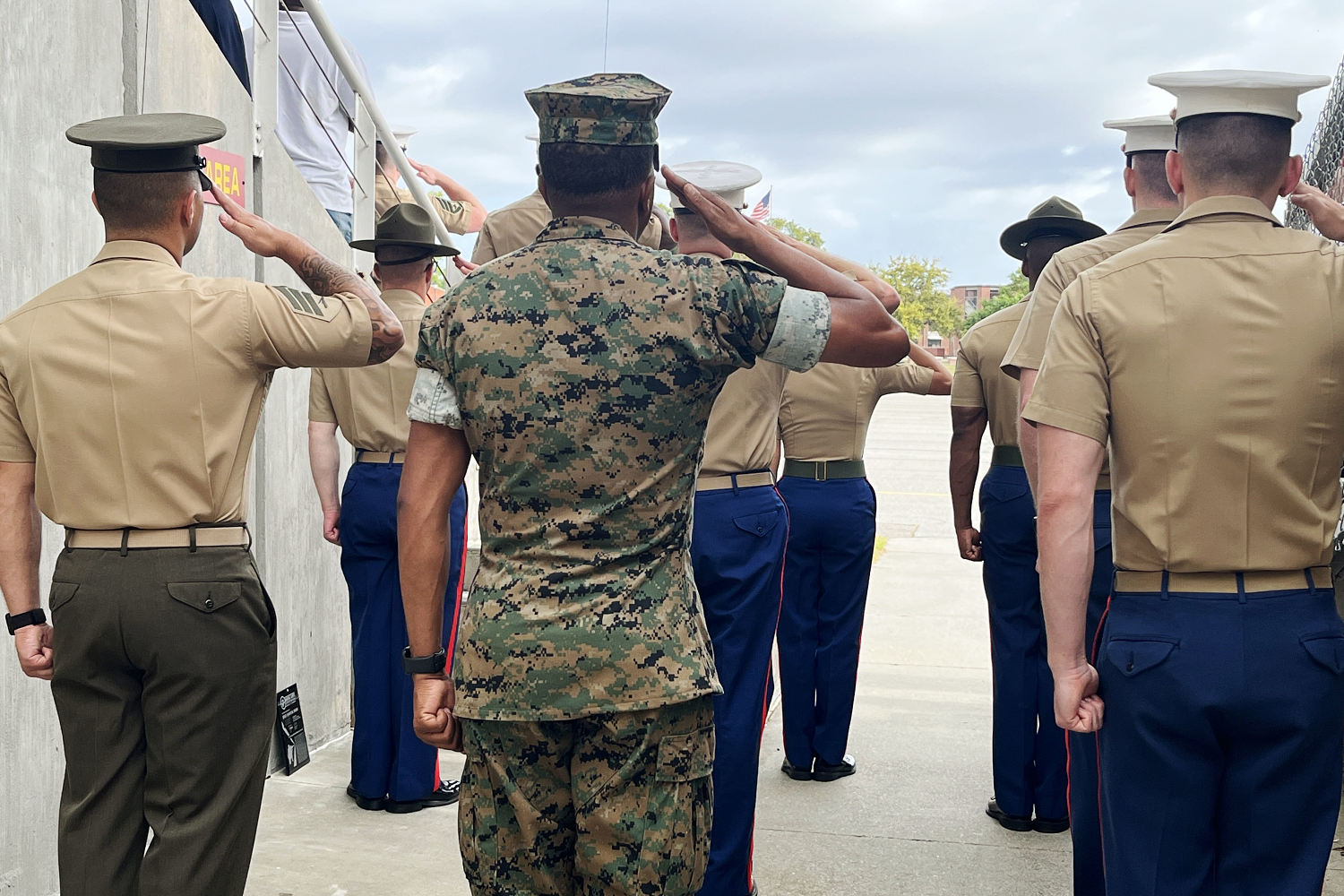
Some Marines graduate without their parents' presence amid ICE fears
#Marines #graduation #ICE #immigration fears #military families #undocumented #enforcement #ceremony
📌 Key Takeaways
- Some Marine Corps graduates had parents absent from their ceremonies due to fears of ICE enforcement.
- The absence highlights the impact of immigration policies on military families.
- The situation underscores the emotional and logistical challenges faced by service members with undocumented relatives.
- This incident raises questions about support systems for military families affected by immigration issues.
📖 Full Retelling
🏷️ Themes
Immigration, Military Families
📚 Related People & Topics

Marines
Military organization specialized in amphibious warfare
Marines (or naval infantry) are military personnel generally trained to operate on both land and sea, with a particular focus on amphibious warfare. Historically, the main tasks undertaken by marines have included raiding ashore (often in support of naval objectives) and the boarding of vessels duri...

United States Immigration and Customs Enforcement
US federal law enforcement agency
The United States Immigration and Customs Enforcement (ICE) is a federal law enforcement agency under the United States Department of Homeland Security. Its stated mission is to conduct criminal investigations, enforce immigration laws, preserve national security, and protect public safety. ICE was ...
Entity Intersection Graph
Connections for Marines:
Mentioned Entities
Deep Analysis
Why It Matters
This news highlights the intersection of military service and immigration enforcement, affecting military families and national security. It matters because it reveals how immigration policies can disrupt important family milestones, potentially impacting morale and recruitment within the armed forces. The situation affects immigrant families of service members, the Marine Corps' community relations, and broader discussions on immigration reform and military support systems.
Context & Background
- The U.S. military has long included non-citizen service members, with pathways to citizenship through service under programs like MAVNI (Military Accessions Vital to the National Interest).
- Immigration and Customs Enforcement (ICE) has increased enforcement actions in recent years, leading to heightened fears in immigrant communities, including those with ties to the military.
- Military graduations are significant ceremonies that celebrate service and sacrifice, often attended by families, making absences due to immigration concerns particularly poignant.
- There have been prior instances where service members or their families faced deportation proceedings, sparking debates about protections for military families.
What Happens Next
In the short term, military branches may review policies to support affected families, while advocacy groups could push for legislative protections. Upcoming developments might include congressional hearings on immigration and military issues, potential policy changes from the Department of Defense, and increased media attention on similar cases. If unresolved, this could lead to legal challenges or impact recruitment efforts among immigrant communities.
Frequently Asked Questions
Parents who are undocumented or have uncertain immigration status may avoid public events like graduations due to risks of detection and deportation by ICE, especially in heightened enforcement environments. This fear stems from past incidents where immigration enforcement occurred at sensitive locations.
It can lower morale among service members whose families are impacted, potentially affecting unit cohesion and retention. The Marine Corps may face challenges in supporting diverse recruits and maintaining trust within immigrant communities, which could influence recruitment and public perception.
Limited protections exist, such as parole-in-place programs for immediate relatives of service members, but these are not universally applied or guaranteed. Enforcement policies vary, and families often rely on discretionary measures, leading to uncertainty and fear in many cases.
Solutions include legislative actions to provide clearer protections for military families, policy changes within the Department of Homeland Security to exempt such events from enforcement, and increased support services from the military for affected members. Advocacy and public awareness are also key to driving change.
While not widespread, similar incidents have been reported in various branches, reflecting broader tensions between immigration policies and military service. The frequency may vary based on enforcement trends and the demographic composition of service members' families.