
Supreme Court to consider deadlines for late-arriving mail ballots
#Supreme Court #Mail Ballots #Election Deadlines #Postmarked Ballots #Election Integrity #Voting Rights #Mail-in Voting #Election Law
📌 Key Takeaways
- The Supreme Court will review whether states can count mail ballots postmarked by Election Day but arriving late
- The cases come amid ongoing debates about election integrity and mail voting procedures
- States have implemented varying rules for mail ballot deadlines
- The court's decision could standardize practices or leave them to state discretion
- The cases continue legal battles over election rules that intensified after the 2020 election
📖 Full Retelling
🏷️ Themes
Election Law, Voting Rights, Supreme Court, Mail-in Voting
📚 Related People & Topics
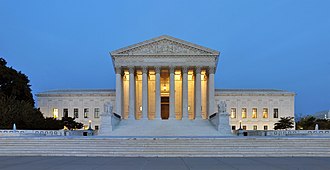
Supreme court
Highest court in a jurisdiction
In most legal jurisdictions, a supreme court, also known as a court of last resort, apex court, high (or final) court of appeal, and court of final appeal, is the highest court within the hierarchy of courts. Broadly speaking, the decisions of a supreme court are binding on all other courts in a nat...
Entity Intersection Graph
Connections for Supreme court:
Mentioned Entities
Deep Analysis
Why It Matters
This Supreme Court case is significant because it addresses a critical aspect of election administration that has become increasingly contentious in recent years. The decision could affect how millions of votes are counted in future elections, potentially determining outcomes of close races. This case also represents a key battleground in the tension between voter access and election integrity that has defined recent election reform debates.
Context & Background
- Mail-in voting expanded dramatically during the 2020 presidential election due to the COVID-19 pandemic, making counting procedures a political focal point
- Following the 2020 election, several states passed new laws restricting mail voting procedures while others expanded access
- The Supreme Court has previously addressed mail voting issues, including in cases like *Brnovich v. DNC* (2021) which upheld certain voting restrictions
- The debate over mail ballot deadlines has become increasingly partisan, with Democrats generally favoring more lenient deadlines and Republicans advocating for stricter ones
- The U.S. Postal Service faced significant scrutiny during the 2020 election over its capacity to handle the surge in mail ballots
What Happens Next
The Supreme Court will hear arguments in these cases during its current term, with decisions expected by June 2024. The ruling could either uphold state authority to set their own deadlines or establish uniform federal standards. If stricter deadlines are imposed, it could prompt legislative action in states that currently accept late-arriving ballots and influence election laws leading up to the 2024 presidential election.
Frequently Asked Questions
The Supreme Court will review cases concerning whether states can count mail ballots that are postmarked by Election Day but arrive after the deadline. While the article doesn't specify the exact case names, these typically involve challenges to state laws that either accept or reject late-arriving ballots.
Depending on the ruling, this could significantly impact how mail ballots are counted in 2024. If stricter deadlines are imposed, it could reduce the number of valid ballots in states with lenient current policies, potentially affecting close races and influencing state election reforms before the 2024 election.
States generally have authority to administer elections under the 'independent state legislature theory,' though this has been subject to judicial review. The Constitution gives states power to set election procedures, but federal laws like the Help America Vote Act and the Voting Rights Act also constrain state authority.
Research on this issue has produced mixed results. Some studies have found minimal fraud associated with mail voting, while others have noted that a small percentage of ballots are rejected for arriving late. The extent of potential problems varies significantly by state and local election administration practices.