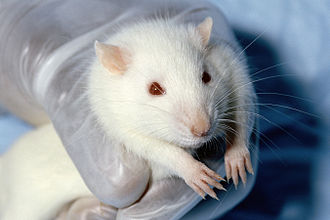
UK government announced phase-out plan for animal testing
Skin irritation tests to be eliminated this year
Organ and computer models enabling alternatives
Significant scientific challenges remain
UK initiative could influence global research standards
📖 Full Retelling
The UK government announced a bold plan last November to phase out animal testing in certain research areas, with skin irritation tests scheduled for elimination this year and significant reductions in dog studies by 2030, driven by the long-term vision of eliminating animal use in science except in exceptional circumstances. This ambitious initiative reflects a growing global movement toward reducing reliance on animal experimentation, coming amid significant advances in alternative methods such as organ models and computer simulations that could potentially replace some animal tests. However, scientists acknowledge that substantial challenges remain before these alternatives can be widely implemented across all research fields, as the policy document outlines a gradual approach recognizing that completely ending animal testing cannot happen overnight due to current scientific limitations. While some tests like those for skin irritation can be replaced relatively soon with in vitro methods and computational models, more complex research areas may require longer transition periods, potentially positioning the UK as a leader that could influence other countries and international research standards.
🏷️ Themes
Animal Testing, Scientific Alternatives, Research Ethics, Policy Change
Process of mathematical modelling, performed on a computer
Computer simulation is the running of a mathematical model on a computer, the model being designed to represent the behaviour of, or the outcome of, a real-world or physical system. The reliability of some mathematical models can be determined by comparing their results to the real-world outcomes th...
Animal testing, also known as animal experimentation, animal research, and in vivo testing, is the use of non-human animals, as model organisms, in experiments that seek answers to scientific and medical questions. This approach can be contrasted with field studies in which animals are observed in t...
No entity connections available yet for this article.
Original Source
NEWS FEATURE 25 February 2026 The age of animal experiments is waning. Where will science go next? Advances in organ and computer models are raising the prospect that some animal experiments could be eliminated. But there are still huge hurdles to overcome. By Diana Kwon 0 Diana Kwon Diana Kwon is a freelance science journalist in Berlin. View author publications Search author on: PubMed Google Scholar Email Bluesky Facebook LinkedIn Reddit Whatsapp X Last November, the UK government announced a bold plan to phase out animal testing in some areas of research. Animal tests for skin irritation are scheduled for elimination this year, and some studies on dogs should be slashed by 2030. The long-term vision is “a world where the use of animals in science is eliminated in all but exceptional circumstances”, the government policy reads. Why simply ending animal testing isn’t the answer in biomedical research