
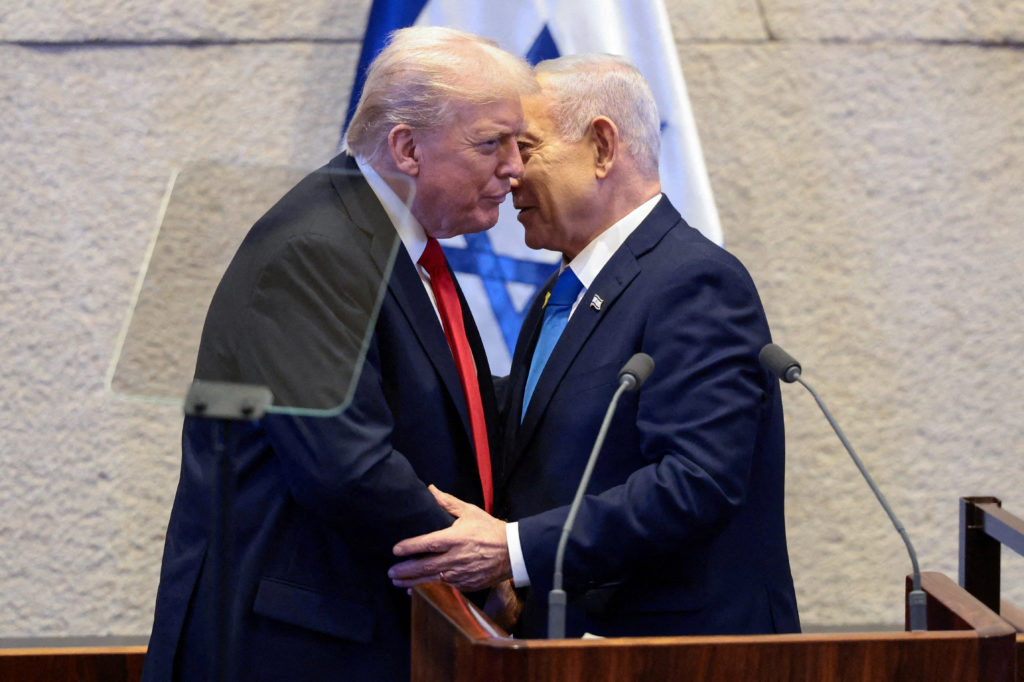
Trump 'insisted' to Netanyahu that Iran talks continue as Israel pushes for tougher limits
#Donald Trump #Benjamin Netanyahu #Iran Nuclear Deal #Ballistic Missiles #Hamas #Hezbollah #U.S.-Israel Relations
📌 Key Takeaways
- President Trump insisted to Prime Minister Netanyahu that diplomatic talks with Iran must continue.
- The U.S. position now requires any deal to include a total ban on nuclear weapons and ballistic missiles.
- Israel is pushing for even broader restrictions, targeting Iran's support for Hamas and Hezbollah.
- Both leaders are moving toward a more comprehensive strategy that links nuclear capability with regional proxy warfare.
📖 Full Retelling
U.S. President Donald Trump held high-level discussions with Israeli Prime Minister Benjamin Netanyahu this week, insisting that diplomatic negotiations regarding Iran’s nuclear program must continue despite a push for significantly more stringent restrictions. Amidst ongoing regional tensions and the expiration of certain international oversight measures, Washington and Jerusalem are seeking to synchronize their strategy to prevent Tehran from achieving nuclear capabilities. The dialogue underscores a shared strategic goal between the two leaders to overhaul current agreements that they believe are insufficient to protect Middle Eastern security and global interests.
During the deliberations, President Trump emphasized that any future framework or deal must explicitly include comprehensive bans on both nuclear armaments and long-range ballistic missiles. This position represents a hardening of the U.S. stance, aiming to close perceived loopholes in previous international accords that focused primarily on uranium enrichment while neglecting the delivery systems necessary for a nuclear strike. The Trump administration’s insistence on these preconditions signals a refusal to return to the status quo of the 2015 Joint Comprehensive Plan of Action (JCPOA) without fundamental structural changes.
Prime Minister Netanyahu’s office reinforced this hardline approach, stating that Israel demands even tougher limits that extend beyond the nuclear sphere. Specifically, the Israeli leadership is advocating for a deal that curtails Iran’s regional influence and its financial and military support for proxy groups, most notably Hamas in Gaza and Hezbollah in Lebanon. By linking the nuclear negotiations to Iran’s state-sponsored militancy, Israel seeks to dismantle what it views as an integrated existential threat to its national borders.
These developments suggest a shift toward a 'maximum pressure' diplomatic strategy, where the threat of continued sanctions remains the primary lever for securing concessions. While the call for continued talks suggests a preference for a negotiated settlement over military intervention, the expansive list of demands ensures that any upcoming diplomatic sessions will be fraught with complexity. The inclusion of non-nuclear issues, such as regional proxy support and missile development, creates a high bar for Tehran, reflecting a unified front between the United States and Israel in their efforts to contain Iranian expansionism.
🏷️ Themes
International Diplomacy, Middle East Security, Nuclear Non-proliferation
Entity Intersection Graph
No entity connections available yet for this article.