

Trump says he is ’disappointed’ that Mojtaba Khamenei became Iran’s supreme leader
#Trump #Mojtaba Khamenei #Iran #supreme leader #disappointment #foreign policy #diplomacy
📌 Key Takeaways
- Former President Trump expressed disappointment over Mojtaba Khamenei's rise to Iran's supreme leader.
- The statement reflects ongoing U.S.-Iran tensions under Trump's foreign policy stance.
- Trump's comments highlight his critical view of Iran's leadership succession.
- The remark may influence diplomatic relations and public perception of Iran's governance.
🏷️ Themes
U.S.-Iran Relations, Political Leadership
📚 Related People & Topics
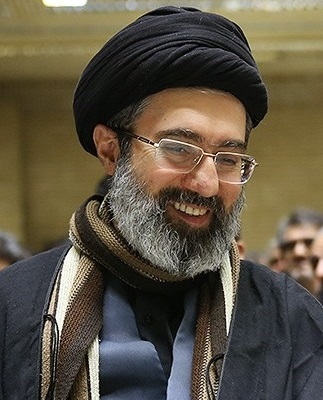
Mojtaba Khamenei
Iranian politician and cleric (born 1969)
Mojtaba Hosseini Khamenei (born 8 September 1969) is an Iranian politician and Muslim cleric. The second eldest child of Ali Khamenei, the former supreme leader of Iran, Mojtaba Khamenei served in the Iran–Iraq War from 1987 to 1988, and also reportedly took control of the Basij that was used to sup...

Iran
Country in West Asia
# Iran **Iran**, officially the **Islamic Republic of Iran** and historically known as **Persia**, is a sovereign country situated in West Asia. It is a major regional power, ranking as the 17th-largest country in the world by both land area and population. Combining a rich historical legacy with a...

Donald Trump
President of the United States (2017–2021; since 2025)
Donald John Trump (born June 14, 1946) is an American politician, media personality, and businessman who is the 47th president of the United States. A member of the Republican Party, he served as the 45th president from 2017 to 2021. Born into a wealthy New York City family, Trump graduated from the...
Entity Intersection Graph
Connections for Mojtaba Khamenei:
Mentioned Entities
Deep Analysis
Why It Matters
This statement matters because it represents direct U.S. commentary on Iran's internal succession process, which could influence diplomatic relations between the two nations. It affects U.S.-Iran relations, international observers monitoring Iran's leadership transition, and Iranian officials who may view this as foreign interference. The comment could potentially complicate future negotiations or escalate tensions between the long-standing adversaries.
Context & Background
- Iran's Supreme Leader is the highest authority in Iran's political system, with significant control over foreign policy, military, and judiciary
- The position has been held by Ayatollah Ali Khamenei since 1989 following the death of Ayatollah Ruhollah Khomeini
- Succession planning has been a sensitive topic in Iran as Khamenei is 85 years old and has health concerns
- Mojtaba Khamenei is one of Ayatollah Khamenei's sons and has been mentioned as a potential successor, though no official succession process has been announced
- U.S.-Iran relations have been strained for decades, particularly since the 1979 Iranian Revolution and the subsequent hostage crisis
What Happens Next
Iranian officials will likely respond to what they perceive as foreign interference in their internal affairs. The succession process will continue to be closely monitored by international observers. Future U.S. administrations may face complications in Iran policy depending on how succession unfolds and how this comment is perceived long-term.
Frequently Asked Questions
Mojtaba Khamenei is the second son of current Supreme Leader Ayatollah Ali Khamenei. He is a mid-ranking cleric who has maintained a relatively low public profile but is believed to have influence within Iran's political and security establishments.
Iran's Supreme Leader is selected by the Assembly of Experts, an 88-member body of Islamic scholars elected by the public. The Assembly is responsible for overseeing the Supreme Leader's performance and selecting a successor when the position becomes vacant.
Trump's comment reflects ongoing U.S. interest in Iran's leadership and potentially signals concern about continuity in Iranian policies. Such comments may also be intended to influence internal Iranian discussions or demonstrate continued U.S. engagement with Iranian affairs despite diplomatic tensions.
No, Ayatollah Ali Khamenei remains Iran's Supreme Leader. Trump's comment appears to reference a hypothetical or anticipated succession that has not yet occurred, suggesting he is commenting on potential future leadership rather than an actual transition.
Iran will likely condemn the statement as interference in its internal affairs. Iranian officials may use this to bolster domestic narratives about U.S. hostility and could potentially harden their position in any future negotiations with the United States.