
Trump says 'it would be great' if US 'didn't have to use' military force on Iran
#Trump Iran military #Persian Gulf tensions #US Iran diplomacy #maximum pressure campaign #Tehran nuclear program #Pentagon Gulf deployment #Middle East security
📌 Key Takeaways
- President Trump expressed a preference for diplomatic resolution over military conflict with Iran.
- The U.S. is concurrently increasing its military footprint in the Gulf through carrier and bomber deployments.
- Trump has set two non-negotiable conditions for Iran to follow to avoid a potential military strike.
- The administration's 'Maximum Pressure' campaign combines economic sanctions with a show of military force.
- The U.S. aims to halt Iran's nuclear program and eliminate its support for regional proxy groups.
📖 Full Retelling
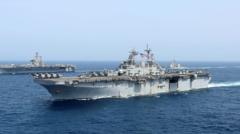
President Donald Trump has signaled a cautious preference for diplomacy over military intervention regarding the escalating tensions with Iran, stating that while the United States is currently bolstering its military presence in the Persian Gulf, he believes 'it would be great' if force could be avoided entirely. These remarks come at a critical juncture as the Pentagon deploys additional carrier strike groups and B-52 bombers to the region, citing unspecified threats against U.S. interests and allies from the Iranian regime or its regional proxies.
Despite the aggressive military buildup, the President emphasized that his primary goal is not conflict, but a fundamental change in Tehran's behavior. Trump revealed that he has communicated two specific requirements to Iranian leadership that would neutralize the threat of military action. While the full technical details of these demands remain a subject of sensitive geopolitical negotiation, they center on the permanent cessation of Iran’s nuclear ambitions and the termination of its support for militant groups across the Middle East. The administration’s 'maximum pressure' campaign continues to squeeze the Iranian economy through heavy sanctions, aiming to bring the leadership back to the bargaining table.
The rhetoric from the White House reflects a complex balancing act: maintaining a credible military threat to deter Iranian aggression while keeping the door open for a new, more comprehensive nuclear deal. National security advisors have reportedly presented various military options to the President, yet Trump’s recent statements underscore a personal hesitancy to enter another protracted conflict in the Middle East. For now, the U.S. strategy remains focused on psychological and economic deterrence, with the hope that the display of American naval and aerial power will compel Iran to accept his two conditions without a single shot being fired.
🏷️ Themes
Geopolitics, Military Strategy, Diplomacy, Foreign Policy
Entity Intersection Graph
No entity connections available yet for this article.