
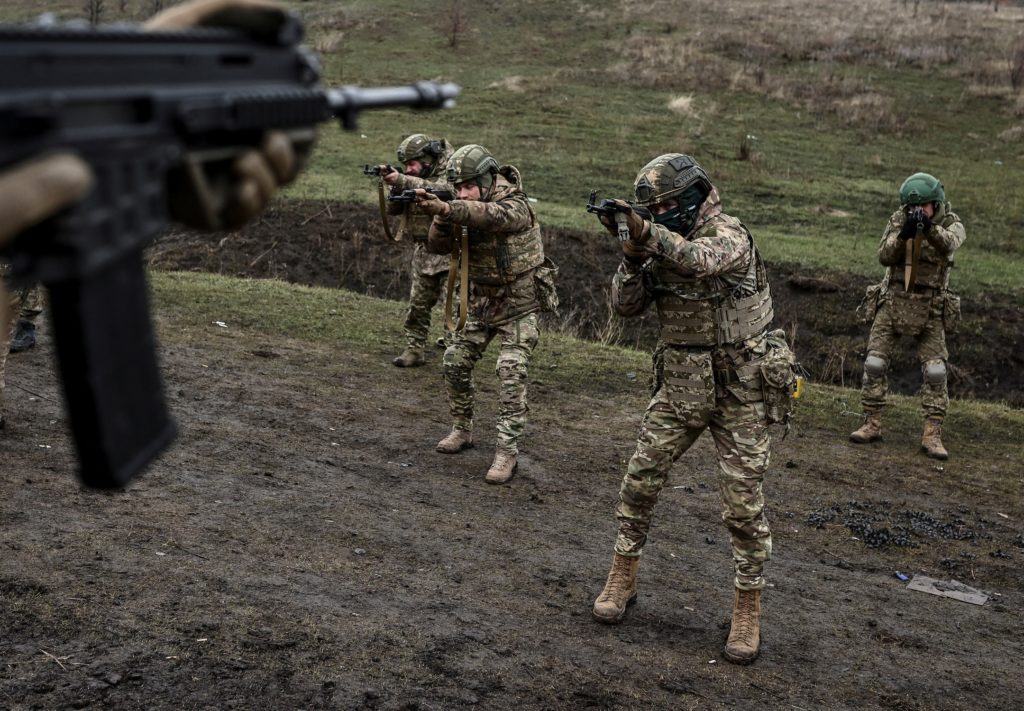
Ukraine faces military desertions as Russian invasion grinds through 5th year
#Ukraine #desertion #Russian invasion #military fatigue #forced mobilization #war attrition #soldier morale
📌 Key Takeaways
- An estimated 150,000 Ukrainian soldiers may be absent from their units due to desertion.
- Primary causes include combat fatigue, anger over dangerous orders, and resentment of forced mobilization.
- The crisis represents a severe human resources and morale problem as the war enters its fifth year.
- Desertions threaten to weaken Ukraine's defensive capabilities by depleting experienced personnel.
📖 Full Retelling
🏷️ Themes
Military Morale, War Fatigue, Human Resources
📚 Related People & Topics

Ukraine
Country in Eastern Europe
# Ukraine **Ukraine** is a country located in Eastern Europe. It is the second-largest country in Europe by area, after Russia. Known for its extensive fertile plains, the nation serves as a critical global exporter of grain and is considered a middle power in international affairs. ## Geography a...
Entity Intersection Graph
Connections for Russian invasion:
Mentioned Entities
Deep Analysis
Why It Matters
This desertion crisis threatens to hollow out Ukraine's defense just as the war enters a critical phase in its fifth year. The loss of experienced troops creates a capability gap that new recruits cannot immediately fill, potentially weakening the frontline against Russian advances. It highlights the severe human cost of the conflict, suggesting that manpower sustainability is becoming as urgent a challenge as ammunition supplies. This situation affects not only the immediate military balance but also the long-term social and psychological recovery of the nation.
Context & Background
- The Russian invasion of Ukraine began in February 2022, escalating a conflict that started in 2014 with the annexation of Crimea.
- Ukrainian troops have faced continuous combat for years with limited opportunities for rest and rotation, leading to extreme fatigue.
- The frontline stretches over 1,000 kilometers, requiring constant manpower to defend against Russian attrition tactics.
- Previous Ukrainian counteroffensives resulted in high casualties, contributing to skepticism regarding military leadership's strategies.
- International military aid has faced delays and uncertainty, increasing the burden on Ukrainian soldiers to hold lines with limited resources.
What Happens Next
Ukrainian military leadership will likely face pressure to implement stricter measures regarding desertion while simultaneously trying to improve rotation policies to boost morale. The government may accelerate reforms to mobilization laws to address the shortage of manpower more effectively. International partners may need to expand their support to include funding for personnel management and mental health services alongside lethal aid.
Frequently Asked Questions
Reports estimate that approximately 150,000 service members are potentially absent from their units.
The main causes include profound war-weariness, extended deployments without rotation, and anger over military command decisions viewed as reckless or suicidal.
The loss of experienced personnel erodes unit cohesion and defensive capabilities, making it difficult to hold the vast frontline against relentless Russian assaults.
The scale of the issue was highlighted in a report by special correspondent Jack Hewson.