
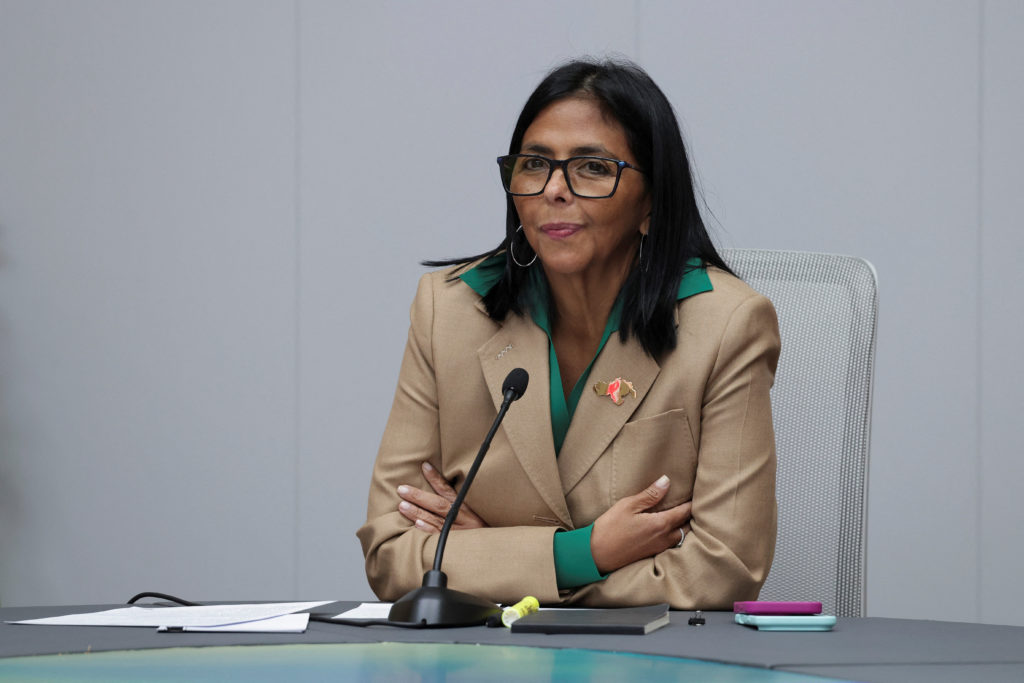
Venezuela's acting president names new defense chief to replace longtime Maduro loyalist
#Venezuela #defense chief #acting president #Nicolás Maduro #military #political instability #leadership change
📌 Key Takeaways
- Venezuela's acting president appoints a new defense chief.
- The replacement removes a longtime loyalist of Nicolás Maduro.
- The change signals a potential shift in military leadership.
- The move occurs amid ongoing political and economic instability in Venezuela.
📖 Full Retelling
🏷️ Themes
Political Change, Military Leadership
📚 Related People & Topics

Venezuela
Venezuela, officially the Bolivarian Republic of Venezuela, is a country on the northern coast of South America, consisting of a continental landmass and various islands and islets in the Caribbean Sea. It comprises an area of 912,050 km2 (352,140 sq mi), with a population estimated at 31.8 million ...
Entity Intersection Graph
Connections for Venezuela:
Mentioned Entities
Deep Analysis
Why It Matters
This military leadership change is significant because it represents a potential shift in Venezuela's power dynamics during a critical political transition. It affects the Venezuelan military establishment, opposition groups, and international observers monitoring the country's stability. The replacement of a longtime Maduro loyalist could signal either internal military realignment or an attempt to consolidate control under new leadership. This development has implications for Venezuela's ongoing economic crisis and the legitimacy of its transitional government.
Context & Background
- Venezuela has been in political crisis since 2019 when Juan Guaidó declared himself interim president, challenging Nicolás Maduro's disputed re-election
- The Venezuelan military has historically been a key power broker, with top commanders maintaining loyalty to Maduro throughout years of economic collapse and international sanctions
- Previous defense ministers under Maduro included Vladimir Padrino López (2014-2023) and others who played crucial roles in maintaining the government during mass protests and international pressure
- The country's defense ministry controls not only military forces but also important economic assets and security operations throughout Venezuela
What Happens Next
Observers will monitor whether the new defense chief maintains military unity or faces internal challenges from remaining Maduro loyalists. International reactions from the United States, European Union, and regional neighbors will likely follow within days. The change may influence upcoming electoral processes and negotiations between government and opposition factions. Military deployments and security operations in coming weeks will indicate whether this represents substantive change or merely symbolic reshuffling.
Frequently Asked Questions
The acting president is likely referring to either Nicolás Maduro maintaining his position or a transitional figure if there has been a recent political shift. The article doesn't specify, but Venezuela has had competing claims to presidential authority since 2019.
Possible reasons include internal military dissatisfaction, attempts to refresh the government's image, or strategic realignment ahead of political negotiations. Such changes sometimes indicate power struggles within ruling circles or responses to external pressures.
Military leadership changes can impact security operations, economic activities involving military-controlled sectors, and overall political stability. Citizens may experience changes in street-level security presence or observe shifts in how military resources are deployed.
Foreign governments will assess whether this represents genuine reform or superficial change. Countries recognizing different Venezuelan administrations may adjust their diplomatic and sanction approaches based on how the new defense chief aligns with their interests.
While possible, the Venezuelan military has generally maintained cohesion despite economic hardships. Much depends on whether the replacement was consensual among senior officers or imposed against significant opposition within armed forces leadership.