
What stood out from Trump's response to Supreme Court's tariff ruling
#Trump #Supreme Court #tariffs #trade policy #judicial review #executive authority #protectionism #separation of powers
📌 Key Takeaways
- Trump called Supreme Court tariff ruling 'deeply disappointing'
- Six justices voted against Trump's global tariff policy
- Ruling represents a check on presidential trade authority
- Trump may seek alternative methods to implement protectionist policies
📖 Full Retelling
🏷️ Themes
Presidential Power, Trade Policy, Judicial Review
📚 Related People & Topics
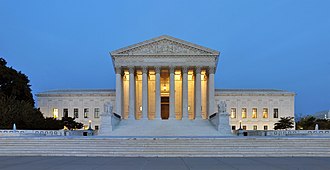
Supreme court
Highest court in a jurisdiction
In most legal jurisdictions, a supreme court, also known as a court of last resort, apex court, high (or final) court of appeal, and court of final appeal, is the highest court within the hierarchy of courts. Broadly speaking, the decisions of a supreme court are binding on all other courts in a nat...

CBS News
News division of the American television and radio service CBS
CBS News is the news division of the American television and radio broadcaster CBS headquartered in New York City. Along with ABC News and NBC News, it has long been among the big three broadcast news networks in the United States. CBS News television programs include CBS Evening News, CBS Mornings,...

Donald Trump
President of the United States (2017–2021; since 2025)
Donald John Trump (born June 14, 1946) is an American politician, media personality, and businessman who is the 47th president of the United States. A member of the Republican Party, he served as the 45th president from 2017 to 2021. Born into a wealthy New York City family, Trump graduated from the...
Entity Intersection Graph
Connections for Supreme court:
Deep Analysis
Why It Matters
This ruling is pivotal as it reasserts Congress's constitutional power to regulate international trade, curbing the expansion of executive authority. It affects American businesses and consumers by potentially preventing sudden, unilateral price increases on imported goods. Additionally, the decision establishes a significant legal precedent that will constrain the economic policy options of future presidents.
Context & Background
- Article I, Section 8 of the U.S. Constitution explicitly grants Congress the power to 'lay and collect duties' and regulate commerce with foreign nations.
- Historically, Congress has delegated some tariff authority to the President under acts like the Trade Expansion Act of 1962, often citing national security.
- President Trump previously used Section 232 of that act to justify tariffs on steel and aluminum during his first term.
- The Supreme Court has generally deferred to the executive branch on national security issues, making this rejection of that deference legally significant.
- Protectionist trade policies have been a central pillar of Trump's economic agenda, aiming to reduce trade deficits and boost domestic manufacturing.
What Happens Next
The Trump administration will likely attempt to circumvent the ruling by pursuing narrower executive actions or negotiating bilateral agreements that do not require broad congressional approval. Congress may move to draft new legislation that either clarifies the limits of executive power or explicitly grants the president specific tariff authorities. Legal battles are expected to continue as the administration tests the boundaries of the Supreme Court's restrictions.
Frequently Asked Questions
The Court struck down President Trump's global tariffs, deciding that he exceeded his constitutional authority by imposing them without approval from Congress.
It reinforces the separation of powers by limiting the executive branch's ability to unilaterally make major economic policy decisions without legislative oversight.
Trump issued a public statement calling the ruling 'deeply disappointing' and criticized the six justices who voted against him.
Legal analysts suggest the Court ruled that the President violated the separation of powers by acting outside the authority granted by the Constitution and Congress.
Yes, he may seek alternative methods such as targeted executive orders or specific trade agreements with individual countries to pursue his agenda.