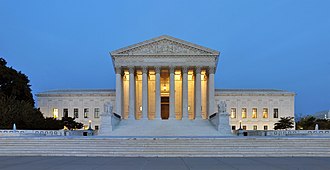
Supreme Court struck down Trump's emergency tariffs in a 6-3 decision
Court ruled 1977 act did not grant Trump authority to impose tariffs
Trump plans to use other laws to advance tariff agenda
Decision represents limitation on presidential trade authority
📖 Full Retelling
The Supreme Court in Washington D.C. struck down President Trump's emergency tariffs in a 6-3 decision on Friday, ruling that a 1977 law did not provide the necessary authority for the president to impose such levies. The decision represents a significant limitation on presidential power regarding trade policy, potentially reshaping how future presidents can implement tariffs during national emergencies. The tariffs, which had been imposed under the premise of protecting national security, affected billions of dollars worth of imported goods, with the majority opinion emphasizing that while Congress has broad authority over foreign commerce, the specific 1977 statute invoked by Trump did not explicitly grant emergency tariff powers. Following the ruling, President Trump indicated he would not abandon his tariff agenda, stating his intention to utilize alternative legal frameworks to advance protectionist trade policies, potentially facing further legal challenges as the administration seeks to achieve its trade objectives through different statutory avenues.
In most legal jurisdictions, a supreme court, also known as a court of last resort, apex court, high (or final) court of appeal, and court of final appeal, is the highest court within the hierarchy of courts. Broadly speaking, the decisions of a supreme court are binding on all other courts in a nat...
A commercial policy (also referred to as a trade policy or international trade policy) is a government's policy governing international trade. Commercial policy is an all encompassing term that is used to cover topics which involve international trade. Trade policy is often described in terms of a ...