
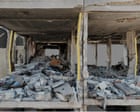
Artist files war crime case in Paris over Israeli strike that killed parents in Lebanon
📖 Full Retelling
📚 Related People & Topics

Lebanon
Country in West Asia
Lebanon, officially the Lebanese Republic, is a country in the Levant region of West Asia. Situated at the crossroads of the Mediterranean Basin and the Arabian Peninsula, it is bordered by Syria to the north and east, Israel to the south, and the Mediterranean Sea to the west; Cyprus lies a short d...

Israel
Country in West Asia
Israel, officially the State of Israel, is a country in the Southern Levant region of West Asia. It is bordered by Lebanon to the north, Syria to the northeast, Jordan to the east, and Egypt to the southwest. Israel occupies the West Bank and the Gaza Strip of the Palestinian territories, as well as...
Entity Intersection Graph
Connections for Lebanon:
View full profileMentioned Entities
Deep Analysis
Why It Matters
This case represents a significant attempt to hold military forces accountable for civilian casualties through international legal channels, potentially setting precedents for future war crime prosecutions. It affects families of conflict victims seeking justice, international human rights organizations monitoring accountability, and governments whose military actions face legal scrutiny abroad. The outcome could influence how nations conduct military operations in civilian areas and whether domestic courts increasingly become venues for international humanitarian law enforcement.
Context & Background
- France has universal jurisdiction laws allowing prosecution of war crimes committed abroad under certain conditions
- Israel and Hezbollah have engaged in cross-border exchanges since October 2023, with strikes frequently hitting civilian areas in southern Lebanon
- International humanitarian law prohibits disproportionate attacks and requires distinction between military targets and civilians
- Previous attempts to prosecute Israeli officials for war crimes in European courts have faced political and legal challenges
- The 1949 Geneva Conventions and their Additional Protocols form the legal basis for war crime allegations in international conflicts
What Happens Next
French prosecutors will review the case to determine if there's sufficient evidence to open a formal investigation, a process that could take months. If the case proceeds, it may face diplomatic pressure from Israel and allies questioning French jurisdiction. Parallel developments may include increased documentation of civilian casualties in Lebanon by human rights groups and potential similar cases being filed in other European countries with universal jurisdiction laws.
Frequently Asked Questions
France's universal jurisdiction laws permit prosecution of serious international crimes like war crimes regardless of where they occurred or the nationality of those involved, provided there's a connection to France such as the plaintiff being a French resident.
War crimes include deliberate attacks on civilians, disproportionate military force causing excessive civilian harm, and attacks on civilian infrastructure without military necessity. These violations are defined in the Geneva Conventions and Rome Statute.
Convictions are statistically rare in such cases due to evidentiary challenges, jurisdictional disputes, and political pressures. However, even unsuccessful cases can draw attention to civilian casualties and influence military conduct.
The case may strain diplomatic relations if perceived as politically motivated, though France maintains independent judiciary principles. Israel typically rejects such cases as biased and may respond through diplomatic channels.
This domestic legal action complements international efforts like ICC investigations and UN commissions of inquiry, creating multiple potential avenues for accountability when international bodies face political obstacles.