
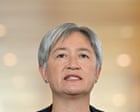
Australia backs Lebanon’s sovereignty and opposes occupation, Penny Wong tells Israel
#Australia #Lebanon #sovereignty #occupation #Penny Wong #Israel #diplomacy
📌 Key Takeaways
- Australia supports Lebanon's sovereignty and opposes occupation.
- Foreign Minister Penny Wong conveyed this stance directly to Israel.
- The statement addresses regional tensions and territorial disputes.
- Australia is taking a diplomatic position on Middle East conflicts.
📖 Full Retelling
🏷️ Themes
Diplomacy, Sovereignty
📚 Related People & Topics

Australia
Country in Oceania
Australia, officially the Commonwealth of Australia, is a country comprising the mainland of the Australian continent, the island of Tasmania and numerous smaller islands. It has a total area of 7,688,287 km2 (2,968,464 sq mi), making it the sixth-largest country in the world and the largest in Ocea...

Lebanon
Country in West Asia
Lebanon, officially the Lebanese Republic, is a country in the Levant region of West Asia. Situated at the crossroads of the Mediterranean Basin and the Arabian Peninsula, it is bordered by Syria to the north and east, Israel to the south, and the Mediterranean Sea to the west; Cyprus lies a short d...

Israel
Country in West Asia
Israel, officially the State of Israel, is a country in the Southern Levant region of West Asia. It is bordered by Lebanon to the north, Syria to the northeast, Jordan to the east, and Egypt to the southwest. Israel occupies the West Bank and the Gaza Strip of the Palestinian territories, as well as...

Penny Wong
Australian politician (born 1968)
Penelope Ying-Yen Wong (born 5 November 1968) is an Australian politician who is serving as the Minister for Foreign Affairs and Leader of the Government in the Senate in the Albanese government since 2022. A member of the Australian Labor Party (ALP), she has been a senator for South Australia sinc...
Entity Intersection Graph
Connections for Australia:
Mentioned Entities
Deep Analysis
Why It Matters
This statement matters because it signals Australia's diplomatic position on Middle Eastern conflicts, potentially affecting Australia-Israel relations and regional stability. It impacts Lebanese and Israeli governments seeking international support, Australian citizens with ties to the region, and global diplomatic efforts to prevent escalation. Australia's stance could influence other Western nations' positions and either constrain or enable Israel's military actions near its northern border.
Context & Background
- Australia has historically maintained diplomatic relations with both Israel and Lebanon, often positioning itself as a moderate Western voice in Middle Eastern affairs.
- The Israel-Lebanon border has seen periodic clashes, particularly involving Hezbollah, which controls southern Lebanon and is designated a terrorist organization by Australia and other Western countries.
- Penny Wong, as Australia's Foreign Minister, represents a Labor government that has sometimes taken more critical public stances toward Israeli policies than previous conservative Australian administrations.
- Lebanon is experiencing severe political and economic crises, making its sovereignty particularly vulnerable to regional power struggles and foreign interventions.
What Happens Next
Israel may respond diplomatically to Australia's statement, potentially affecting bilateral cooperation. The UN and other mediators might reference Australia's position in efforts to de-escalate Israel-Lebanon tensions. Australia could face domestic political debate about balancing support for Israel's security with opposition to occupation. If hostilities increase, Australia's stance may influence its participation in potential international peacekeeping or diplomatic initiatives.
Frequently Asked Questions
Australia comments as a UN member and traditional Middle East peace process participant, seeking to prevent regional escalation that could affect global stability. As a Western democracy with diplomatic ties to both nations, Australia positions itself as a voice for international law and sovereignty principles.
This likely references Israeli military presence in disputed border areas or past occupations of Lebanese territory. It may also relate to broader concerns about violations of Lebanese sovereignty by any external actors, including non-state groups operating in Lebanon.
Relations may experience diplomatic friction, especially if Israel views this as unbalanced criticism. However, security and intelligence cooperation likely continues, as Australia maintains recognition of Israel's right to self-defense against threats from Lebanese territory.
This continues Australia's longstanding support for Lebanese sovereignty, consistent with UN resolutions. The public directness toward Israel reflects the current government's more assertive diplomacy on international law issues, but not a fundamental policy shift.
Australia may increase diplomatic engagement with Lebanon, support UNIFIL peacekeeping efforts, and advocate in multilateral forums for peaceful resolution of border disputes. No immediate military or economic actions are implied by this diplomatic statement alone.