
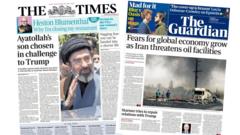
'Ayatollah's son chosen' and 'Iran threatens oil facilities'
#Ayatollah #Iran #oil facilities #threats #leadership #geopolitics #energy security
📌 Key Takeaways
- The son of an Ayatollah has been selected for a significant role, indicating potential shifts in Iran's leadership dynamics.
- Iran has issued threats against oil facilities, raising concerns about regional stability and global energy security.
- The dual developments suggest internal political maneuvering alongside external geopolitical posturing by Iran.
- These actions may impact international relations and oil markets, warranting close monitoring by global stakeholders.
📖 Full Retelling
🏷️ Themes
Leadership, Geopolitics
📚 Related People & Topics

Iran
Country in West Asia
# Iran **Iran**, officially the **Islamic Republic of Iran** and historically known as **Persia**, is a sovereign country situated in West Asia. It is a major regional power, ranking as the 17th-largest country in the world by both land area and population. Combining a rich historical legacy with a...

Ayatollah
High-ranking title given to Usuli Twelver Shī'a Muslim clerics
Ayatollah (Arabic: آية الله, romanized: ʾāyatu llāh, lit. 'sign of god') is a title for high-ranking Twelver Shia clergy. It came into widespread usage in the 20th century. Those who hold this title must be men and specialists in Islamic sciences such as jurisprudence (fiqh) and principles (usul), o...
Entity Intersection Graph
Connections for Iran:
Mentioned Entities
Deep Analysis
Why It Matters
This news matters because it signals potential leadership succession in Iran, which could influence the country's domestic and foreign policies for decades. The threat to oil facilities directly impacts global energy markets, potentially causing price volatility and supply disruptions. These developments affect regional stability in the Middle East, international diplomatic relations, and global economic security.
Context & Background
- Iran has been governed by a theocratic system since the 1979 Islamic Revolution, with Supreme Leaders holding ultimate authority
- The current Supreme Leader Ali Khamenei is 85 years old, making succession planning increasingly urgent
- Iran has previously threatened to disrupt oil shipments through the Strait of Hormuz, through which about 20% of global oil passes
- The country has faced severe economic sanctions that have crippled its oil exports and economy
What Happens Next
Increased scrutiny of Mojtaba Khamenei's political activities and public appearances will occur as analysts assess his potential succession. Iran may conduct military exercises near oil shipping lanes to demonstrate capability. International oil markets will likely experience price fluctuations based on perceived threats to Middle Eastern oil infrastructure. Diplomatic efforts may intensify to prevent escalation in the Persian Gulf region.
Frequently Asked Questions
Mojtaba Khamenei is the second son of current Supreme Leader Ali Khamenei and has been increasingly visible in religious and political circles. His potential succession would mark the first time power passes to a family member within Iran's theocratic system, potentially creating dynastic rule concerns and affecting the legitimacy of the succession process.
Iran has demonstrated capability to disrupt oil shipments through asymmetric warfare tactics like drone attacks and mine-laying. While full-scale closure of the Strait of Hormuz is unlikely due to severe international consequences, targeted disruptions to specific facilities or vessels could significantly impact global oil prices and supply chains.
A new Supreme Leader could either continue current nuclear policies or shift direction based on their theological interpretations and political alliances. Any change would affect ongoing negotiations with Western powers and regional security dynamics, potentially altering the trajectory of Iran's nuclear development program.
The United States and allies typically increase naval presence in the region and coordinate with Gulf states to protect shipping lanes. International responses often combine military deterrence with diplomatic pressure, while oil-consuming nations may release strategic petroleum reserves to stabilize markets during supply disruptions.
A new leader would need to consolidate power among competing factions within Iran's complex political system, address severe economic challenges exacerbated by sanctions, and manage public discontent while maintaining the revolutionary ideology that underpins the Islamic Republic's legitimacy.