
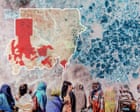
‘Extraordinary cruelty’: images show longterm ‘starvation strategy’ in Sudan
#Sudan #starvation #famine #war crimes #humanitarian crisis #satellite images #malnutrition #conflict
📌 Key Takeaways
- Satellite images reveal systematic destruction of food sources in Sudan, indicating a deliberate starvation strategy.
- The conflict has led to widespread malnutrition and famine conditions, affecting millions of civilians.
- International organizations accuse warring parties of using hunger as a weapon of war, constituting a war crime.
- The humanitarian crisis is escalating, with limited aid access exacerbating the situation.
📖 Full Retelling
🏷️ Themes
Humanitarian Crisis, War Crimes
📚 Related People & Topics

Sudan
Country in Northeast Africa
Sudan, officially the Republic of the Sudan, is a country in Northeast Africa. It borders the Central African Republic to the southwest, Chad to the west, Libya to the northwest, Egypt to the north, the Red Sea to the east, Eritrea and Ethiopia to the southeast, and South Sudan to the south. Sudan h...
Entity Intersection Graph
Connections for Sudan:
Mentioned Entities
Deep Analysis
Why It Matters
This news is critically important because it reveals a deliberate starvation strategy in Sudan, constituting a severe humanitarian crisis and potential war crime under international law. It affects millions of Sudanese civilians, particularly vulnerable groups like children, the elderly, and displaced populations, who face malnutrition, disease, and death. The situation destabilizes the region, exacerbates refugee flows, and challenges global humanitarian response systems, demanding urgent international attention and intervention.
Context & Background
- Sudan has been embroiled in a civil war since April 2023 between the Sudanese Armed Forces (SAF) and the paramilitary Rapid Support Forces (RSF), causing widespread devastation.
- The conflict has roots in long-standing political tensions following the 2019 ouster of former dictator Omar al-Bashir, with rival factions vying for control amid a fragile transition to democracy.
- Sudan has a history of famine and food insecurity, notably during the Darfur conflict in the early 2000s, where starvation was also used as a weapon of war.
- The region is part of the Sahel, which faces chronic challenges like climate change, desertification, and economic instability, worsening food scarcity.
- International efforts, including UN and African Union mediation, have repeatedly failed to secure a lasting ceasefire or humanitarian access in Sudan.
What Happens Next
In the coming weeks, expect increased international condemnation and potential UN Security Council discussions on sanctions or intervention, though geopolitical divisions may hinder action. Humanitarian agencies will likely ramp up appeals for funding and access, while on-the-ground conditions could deteriorate further, leading to higher mortality rates and mass displacement. If evidence solidifies, there may be calls for International Criminal Court investigations into starvation as a war crime, but immediate relief depends on ceasefire negotiations, which remain uncertain.
Frequently Asked Questions
A starvation strategy involves deliberately blocking food, water, and aid to civilians as a military tactic to weaken opponents or control populations. It is prohibited under international humanitarian law, including the Geneva Conventions, and can be prosecuted as a war crime or crime against humanity.
Responsibility is attributed to warring parties, primarily the Sudanese Armed Forces and Rapid Support Forces, who have restricted humanitarian access and targeted food supplies. Investigations are needed to assign specific culpability, but both sides have been accused of violations in the conflict.
Millions are affected, with over 25 million Sudanese needing humanitarian assistance and nearly 18 million facing acute food insecurity as of recent UN reports. The starvation strategy exacerbates these numbers, leading to widespread malnutrition and displacement.
The international community can pressure warring parties through sanctions, support UN-led ceasefire efforts, and fund humanitarian operations for food and medical aid. Diplomatic initiatives must prioritize safe access for aid workers to deliver life-saving assistance to affected areas.
Aid delivery is hindered by active combat, bureaucratic obstacles, looting of supplies, and targeted attacks on humanitarian convoys. Both sides have imposed restrictions, making it dangerous and logistically challenging to reach those in need, especially in conflict zones.