
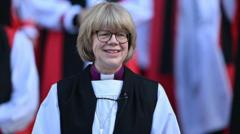
First female Archbishop of Canterbury to be enthroned
#Archbishop of Canterbury #female #enthronement #historic #Church of England #gender equality #religious leadership
📌 Key Takeaways
- The first female Archbishop of Canterbury will be enthroned, marking a historic milestone.
- This appointment breaks centuries of male leadership in the Church of England.
- The enthronement ceremony signifies formal installation into the role.
- The event is expected to influence gender equality discussions in religious institutions globally.
📖 Full Retelling
🏷️ Themes
Religious Leadership, Gender Equality
📚 Related People & Topics

Archbishop of Canterbury
Principal leader of the Church of England
The archbishop of Canterbury is the senior bishop and a principal leader of the Church of England, the ceremonial head of the worldwide Anglican Communion, the bishop of the diocese of Canterbury and metropolitan of the Province of Canterbury. By virtue of their office the archbishop is also a Lord ...

Church of England
Anglican church in England
The Church of England (C of E) is the established Christian church in England and the Crown Dependencies. It was the initial church of the Anglican tradition. The church traces its history to the Christian hierarchy recorded as existing in the Roman province of Britain by the 3rd century and to the ...
Entity Intersection Graph
Connections for Archbishop of Canterbury:
View full profileMentioned Entities
Deep Analysis
Why It Matters
This historic appointment marks a significant milestone for gender equality within the Church of England and the global Anglican Communion, affecting millions of worshippers worldwide. It represents a major shift in one of Christianity's oldest institutions, potentially influencing theological perspectives and leadership models across denominations. The decision will likely impact ecumenical relations with other Christian traditions that maintain male-only clergy, while also serving as a powerful symbol of progress for women in religious leadership globally.
Context & Background
- The Church of England first allowed women to become priests in 1994 after decades of debate and controversy
- Women have been eligible to become bishops in the Church of England since 2014, following legislative changes and heated General Synod debates
- The Archbishop of Canterbury serves as the spiritual leader of the worldwide Anglican Communion, comprising approximately 85 million members across 165 countries
- The position dates back to 597 AD when Augustine of Canterbury arrived in England as a missionary, making this one of Christianity's oldest continuous leadership roles
- Previous archbishops have included influential figures like Thomas Becket (martyred 1170), Thomas Cranmer (key Reformation figure), and recent leaders like Rowan Williams and Justin Welby
What Happens Next
The enthronement ceremony will take place at Canterbury Cathedral, likely followed by a period of transition as the new archbishop establishes her leadership style and priorities. Immediate attention will focus on her initial public statements regarding church unity, social issues, and relations with other Christian denominations. Within the first year, she will need to navigate ongoing debates within the Anglican Communion about sexuality, marriage, and theological differences that have threatened schism.
Frequently Asked Questions
The Archbishop serves as the spiritual leader of the Church of England and symbolic head of the worldwide Anglican Communion, with authority to ordain bishops and influence church policy. However, actual governance is shared with the General Synod and other church bodies, making the role more influential than authoritarian in most matters.
The appointment may strain ecumenical dialogue with the Roman Catholic Church, which maintains male-only priesthood as doctrinal. However, both churches have worked through previous disagreements about women's ordination, suggesting dialogue will continue while acknowledging this significant theological difference.
She will need to unite a divided Anglican Communion while addressing internal disagreements about women's leadership. Additional challenges include declining church attendance in England, ongoing debates about same-sex relationships, and maintaining relevance in an increasingly secular society.
The selection involves a complex process including the Crown Nominations Commission, which submits two names to the Prime Minister, who then recommends one to the monarch for formal appointment. The process considers theological perspective, leadership ability, and capacity to unite diverse Anglican traditions worldwide.
The appointment itself doesn't automatically change formal doctrine, but her leadership may influence how theology is interpreted and applied. Significant doctrinal changes would require approval through the Church's legislative processes, though her perspective will shape discussions about gender, authority, and church practice.