
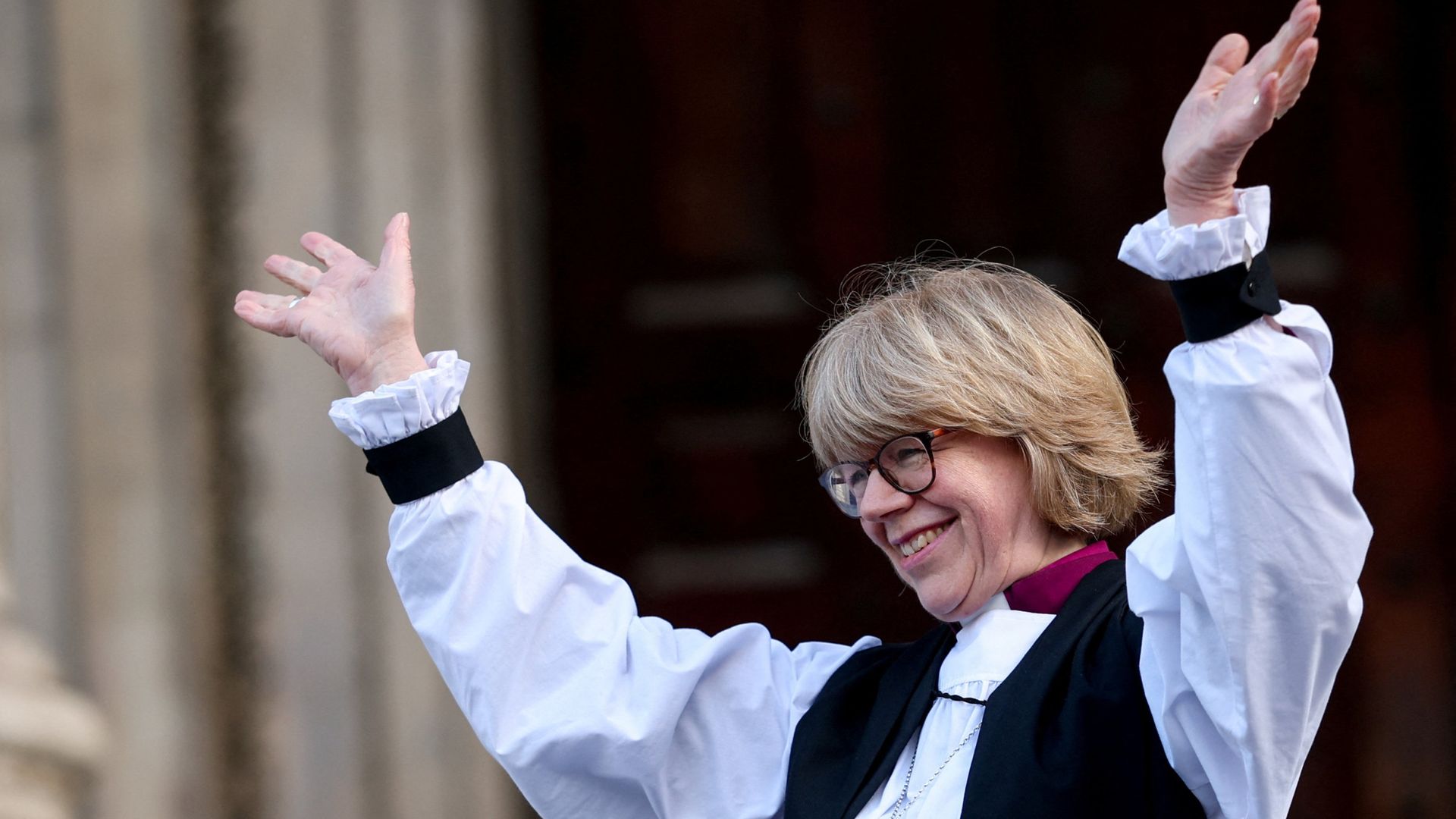
First female Archbishop of Canterbury to be enthroned in 'unimaginable' moment
#Archbishop of Canterbury #female #enthronement #historic #Church of England #gender equality #religious leadership
📌 Key Takeaways
- The first female Archbishop of Canterbury will be enthroned, marking a historic milestone.
- This event is described as 'unimaginable', highlighting its groundbreaking nature.
- It signifies a major shift in leadership within the Church of England.
- The enthronement represents progress toward gender equality in religious institutions.
📖 Full Retelling
🏷️ Themes
Religious Leadership, Gender Equality
📚 Related People & Topics

Archbishop of Canterbury
Principal leader of the Church of England
The archbishop of Canterbury is the senior bishop and a principal leader of the Church of England, the ceremonial head of the worldwide Anglican Communion, the bishop of the diocese of Canterbury and metropolitan of the Province of Canterbury. By virtue of their office the archbishop is also a Lord ...

Church of England
Anglican church in England
The Church of England (C of E) is the established Christian church in England and the Crown Dependencies. It was the initial church of the Anglican tradition. The church traces its history to the Christian hierarchy recorded as existing in the Roman province of Britain by the 3rd century and to the ...
Entity Intersection Graph
Connections for Archbishop of Canterbury:
View full profileMentioned Entities
Deep Analysis
Why It Matters
This represents a historic milestone for gender equality within the global Anglican Communion, affecting approximately 85 million members worldwide. It signals a significant shift in one of Christianity's oldest institutions, potentially influencing other denominations' approaches to female leadership. The appointment challenges traditional patriarchal structures within global Christianity and may inspire greater female participation in religious leadership roles across faith traditions.
Context & Background
- The Archbishop of Canterbury serves as the spiritual leader of the Anglican Communion and the Church of England, a position dating back to 597 AD with Augustine of Canterbury.
- The Church of England first allowed women to become priests in 1994 after decades of debate, with the first female bishops consecrated in 2015.
- The Anglican Communion has experienced significant internal divisions over women's ordination and LGBTQ+ issues, with some conservative provinces threatening schism over progressive changes.
- Previous Archbishops of Canterbury have included notable figures like Thomas Becket (murdered in 1170), Thomas Cranmer (architect of the English Reformation), and Justin Welby (the immediate predecessor).
What Happens Next
The enthronement ceremony will occur at Canterbury Cathedral, likely within the next few months, followed by immediate leadership responsibilities including the Lambeth Conference planning. Conservative Anglican provinces, particularly in Africa and Asia, may formally protest or distance themselves from the Communion. The new Archbishop will need to navigate ongoing tensions within the Communion while establishing her leadership style and priorities.
Frequently Asked Questions
The Archbishop serves as the spiritual head of the Anglican Communion, chairs the Lambeth Conference, crowns British monarchs, and sits in the House of Lords. However, authority varies across the Communion's 42 autonomous provinces, with limited direct power outside England.
Conservative provinces like Nigeria, Uganda, and parts of Australia may further distance themselves, potentially creating parallel structures. The new Archbishop will need to balance progressive reforms with maintaining Communion unity through dialogue and compromise.
She will confront deep theological divisions over gender and sexuality, declining Anglican membership in the West, and the need to modernize church structures. Additionally, she must establish authority while facing potential resistance from traditionalist clergy and congregations.
The Crown Nominations Commission (including clergy and lay members) proposes two candidates to the Prime Minister, who recommends one to the monarch for appointment. The process involves extensive consultation across the Anglican Communion.